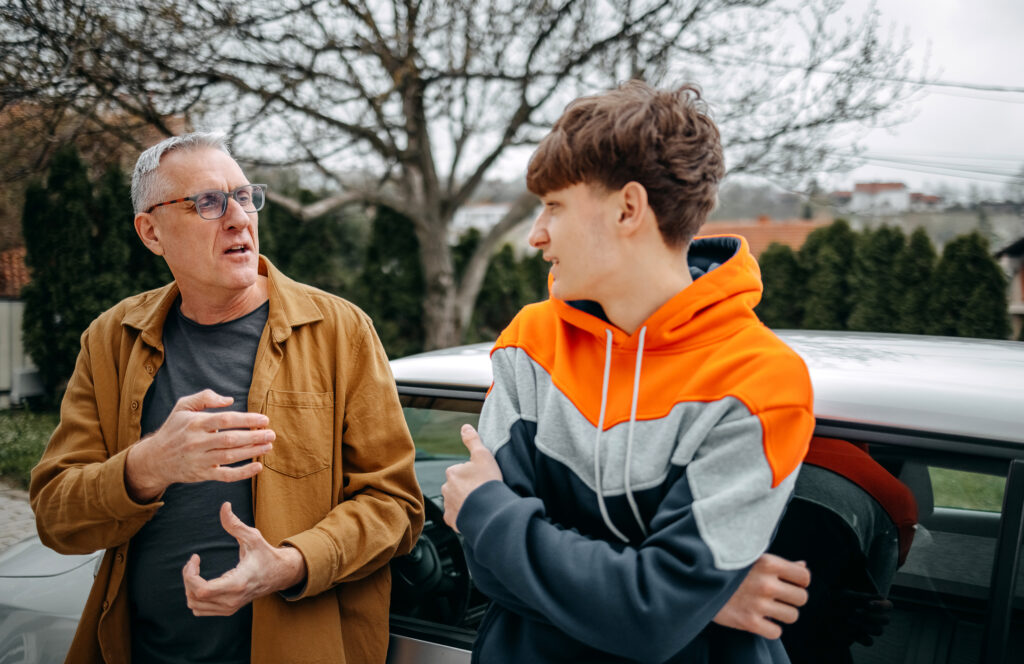
There is a moment, familiar to almost anyone who has loved someone long enough, when you hear yourself say something and think: that wasn’t me. The sharpness in your voice. The sarcasm that landed harder than you intended. You weren’t angry at your partner, not really — you were tired, or flooded with something older and deeper than being late, and the person closest to you caught the shrapnel.
What happened in that moment sits at the center of what clinicians call behavioral health — and it may matter more for your relationship than you realize.
How Individual Behavioral Health Sets the Stage for Connection
We tend to think of relationships as something that happens between two people. And they are. But Dr. John Gottman’s four decades of research in the Love Lab revealed a subtler truth: what each person brings into the relationship — their emotional history, their capacity for self-regulation, the habits of mind they developed long before they ever said “I love you” — can shape interactions that follow.
Gottman calls these inherited patterns enduring vulnerabilities: the sensitivities we carry from childhood, from past relationships, from losses we haven’t fully processed. They aren’t flaws. They’re human. A partner who grew up being told to stop crying may, decades later, still struggle to sit with someone else’s tears. A person who learned early that conflict means abandonment may shut down the moment a voice is raised.
The insight is this: it helps the relationship when partners recognize and navigate enduring vulnerabilites together. That navigation is relational work, but it begins with individual awareness. It begins, in other words, with behavioral health.
Breaking the “Flooding” Cycle: The Role of Self-Regulation in Conflict
In Gottman’s research, one physiological finding stands out above almost all others. When your heart rate exceeds roughly 100 beats per minute during an argument, your capacity to listen — truly listen — effectively shuts down. Gottman calls this state flooding, and it is not a metaphor. It is your nervous system hijacking the conversation.
Flooded partners can’t process nuance. They can’t hear repair attempts. They default to fight, flight, or freeze — not because they don’t care, but because their body has decided, at a level deeper than language, that they are under threat. It is the pulse, not the personality.
The antidote isn’t willpower. It’s self-regulation: learning to recognize when your body has crossed that threshold, pausing for at least twenty minutes to let your nervous system recalibrate, and returning to the conversation from a calmer place. Gottman’s couples who practiced this in the Love Lab showed dramatically lower conflict escalation. One partner’s ability to self-soothe became a gift to the relationship itself.
When Enduring Vulnerabilities Can Become Relationship Patterns: Substance Use and Beyond
Sometimes what a person carries is more than an emotional bruise from childhood. Substance use, chronic anxiety, depression, compulsive behaviors — these can be challenges that might reshape the relational landscape. They can alter how bids for connection are made and received. They can erode trust not through malice, but through unavailability.
Gottman’s research is direct on this point: when addiction or abuse is present, the relationship requires professional support. The tools that help most couples — turning toward, building love maps, managing conflict constructively — depend on both partners being present enough to use them. Individual behavioral health work doesn’t replace relational work; it makes relational work possible.
This is not about assigning blame. It is about honest recognition that sometimes the most loving thing a person can do for their relationship is to address what is happening within themselves — not alone, but with qualified guidance.
FREE Download | What Are You Really Fighting About?
Download an exercise designed to help you learn how to use conflict to communicate better rather than arguing endlessly.
Sign up for Love Notes and Get the FREE Gottman worksheet, What are You Really Fighting About.

The Power of Guided Change: Why Skills Alone Aren’t Enough
There is a tempting narrative in self-help culture: that if you simply know the right techniques, you can fix anything. But Gottman Method Couples Therapy is built on a different premise. It recognizes, for instance, that perpetual problems — the ones rooted in fundamental personality differences and enduring vulnerabilities — account for roughly 69% of all relationship conflict. These problems don’t get “solved.” They get understood, respected, and dialogued with over a lifetime. But when that dialogue around perpetual problems breaks down, it can lead to what Gottman calls Gridlock — a state in which an argument has come to a standstill because both partners disagree on how to move forward.
Maintaining that kind of compassionate dialogue over time is where a trained guide can help. A Gottman-trained therapist helps couples map each other’s inner worlds, process emotional injuries and entrenched positions that have calcified over years, and develop what Gottman calls a shared meaning. These are the shared rituals, dreams, legacy and values that give a relationship its deepest sense of purpose.
Reading about flooding is one thing. Learning to catch it in your own body, in real time, is something else entirely.
Investing in the Self to Save the Pair
In the afterword of The Seven Principles for Making Marriage Work, Gottman describes a pattern he sees in a great many struggling marriages: self-doubt that developed in childhood doesn’t stay contained — it can spill over. “If you consider yourself inadequate,” he writes, “you are always on the lookout for what is not there in yourself and your partner.” The inner critic sometimes directs itself to the person beside you.
Behavioral health — the daily, unglamorous work of understanding your own emotional patterns, managing stress, confronting what needs confronting, and asking for help when the weight is too much — is not a detour from the relationship. It can help shape a healthy foundation the relationship can stand on. The question is what you’re willing to do about it — together.
How compatible are you? Take the next step.
Note: While the Gottman Method offers research-based tools for strengthening relationships, couples dealing with active addiction, abuse, or acute mental health crises should seek specialized professional support. These situations require targeted intervention beyond couples work alone.