When the Human Genome Project was completed in 2003, one of the questions still waiting on the other side was older than DNA itself: how much of love is decided before we meet someone? Two decades later, the answer appears to be hedged in interesting ways.
Genetics in this context can feel either reassuring (“we cannot help it”) or fatalistic (“nothing is going to change”). The research, when looked at carefully, may suggest something less tidy than either.
What are Genetics
Genetics is the study of how traits are passed from one generation to the next. The genes inherited from each parent — coded segments of DNA — appear to shape baseline tendencies in everything from eye color and height to, more relevant here, temperament, stress reactivity, and emotional sensitivity. Genes may set a stage; what happens on the stage is its own story.
What do Genes do?
Genes carry the instructions cells use to build the body and to regulate the chemistry of mood, sleep, attention, and emotional response. Specific gene systems — including those involved in oxytocin, serotonin, and dopamine signaling — have been studied in connection with bonding, anxiety, and reward. Variations in these systems may make one person more sensitive to a partner’s emotional cues, and another less reactive in stressful moments.
The honest scientific picture, however, is hedged. Recent behavioral-genetics reviews suggest the combined genotypes of both partners may account for only around 4% of the variation in marital satisfaction. The much larger share appears to come from somewhere else — from what is built between people, day to day.
How do Genes Affect our Behavior and Personality?
Personality traits like introversion, neuroticism, and conscientiousness — long studied by behavioral geneticists — appear to be moderately heritable. So do certain temperamental qualities like sensitivity, intensity, and tempo. None of this points to behavior being fixed; it points to starting positions that may be more or less easy to work with.
Drs. John and Julie Gottman have written about temperamental tendencies that may shape how each partner shows up to a relationship. In The Relationship Cure, Dr. Gottman draws on the work of neuroscientist Jaak Panksepp at Bowling Green State University, who first described seven “emotional command systems” that may be more or less prominent in different people, and at different moments. The point of that model — at least as it has been applied — is not that biology scripts the relationship; it is that the apparatus we bring is real, and worth knowing, to connect deeper and bring about positive changes in our lives and our relationships.
5 Ways Genetics Can Impact Your Relationships
Couples notice the differences early. He goes quiet under stress; she gets louder. She wants to talk it out; he wants an hour alone. Whether those differences are written in the genes — or written by what happened years before either partner met the other — has occupied behavioral-genetics research for decades. Five places those differences seem to show up most:
1. Stress Response.
How quickly one slides into “fight or flight” — heart rate, cortisol, the threshold for what Gottman’s research has called flooding — may have a partly genetic basis. Some people flood faster than others, and noticing the difference may matter more than overcoming it.
2. Affection and Bonding.
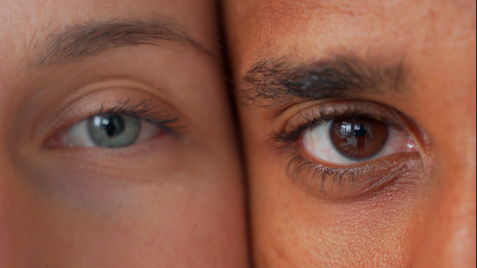
Variations in oxytocin and serotonin pathways may influence how easily physical closeness, eye contact, or verbal warmth come to one person versus another. Different baselines are not incompatible; they may simply ask for explicit conversation about what each partner needs.
3. Conflict Style.
Genetically influenced traits like neuroticism or agreeableness may shape one’s default moves under tension. The default is rarely the destination, however. Couples regularly find their pattern shifts as they learn new tools.
4. Emotional Sensitivity.
Some partners register subtle emotional cues faster and more deeply than others. Genetics likely contributes; context and history shape it too. Either end of the spectrum tends to bring its own gifts and its own challenges.
5. Recovery and Resilience.
How quickly one returns to baseline after a hard day, or a hard fight, may have biological underpinnings. Recovery is not pure willpower — but it is also not fixed.What links all five may be the same point. Genes appear to give each person a hand to play. What happens with that hand — across years and seasons of a relationship — is something else entirely. The skills involved are sometimes called emotional literacy: the practice of naming feelings, understanding a partner’s, and managing the difficult ones together.