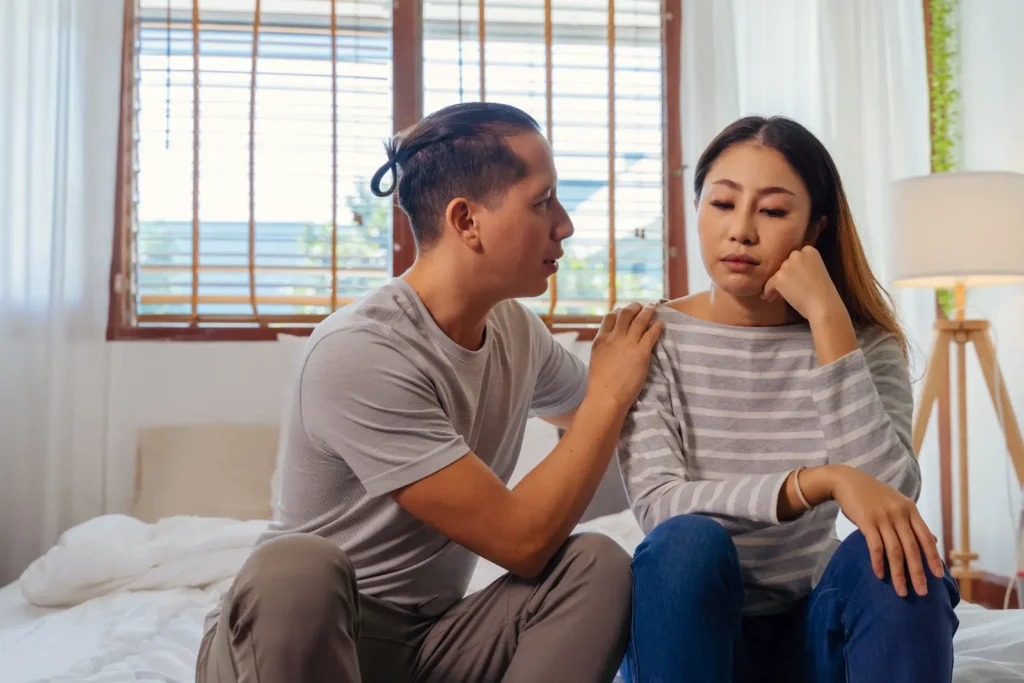
A familiar moment in human-services work: the second hour of an afternoon session, one partner tightening at the shoulders, the other looking somewhere just past her ear. The clinician can feel what has shifted in the room — the empathy that brought her into this work is fully present. The question, as it tends to be in moments like these, is what to do with it next.
Most clinicians in human services arrived in the field by some version of the same route. They wanted to help. They could feel what was happening in front of them. The instinct is rarely the limit; what may matter more, particularly in couples work, is what gives that instinct shape — the structure that turns intuitive caring into reproducible clinical effect.
Why Human Services Demand Intuitive Empathy
Back in the room: ten minutes have passed. The partner who tightened earlier is starting to soften. The other is starting to risk a sentence. None of this happened by itself.
What therapists, social workers, and counselors in this field tend to share is exactly the capacity that made the softening possible — a way of reading a room before anyone has said much of anything. The longer question, in a field where couples can present with patterns set in over decades, is what makes that capacity reliable across the harder cases.
What might make a difference, at least in Drs. John and Julie Gottman’s research, is what comes alongside that capacity. A clinician who can feel what is happening in a session may still wonder, in the next breath, which intervention this moment is asking for. The Gottman Method exists, in part, to take that wondering and give it structure.
The Necessity of Clinical Push Back: Turning Reflection into Growth
Push-back, in this frame, is less about the clinician’s tone and more about the clinician’s method. When a couple’s interaction shifts into one of the patterns Gottman’s research has long flagged — criticism, defensiveness, contempt, stonewalling — the clinician’s task at that exact moment may be to interrupt rather than to mirror. To name the pattern out loud. To redirect from content to process. To slow the physiology before more is said.
Gottman’s Level 2 Training describes this work as helping clinicians “gain insight as to when to use these methods and when couples therapy is contraindicated.” It is not so much about being firmer; it is more about being structured, and at the right moment.
For couples currently looking for a clinician, the Gottman Referral Network connects them with a Gottman-trained therapist near them.
How Guided Therapy Strengthens the Human Connection
The “human connection” this article points to may be something other than the bond between clinician and client. In couples work, the connection that matters most often is the one between the two people in the room with each other — and the clinician’s role, in this view, is to make that connection possible again, not to substitute for it.
This is the work the Sound Relationship House framework appears to have been designed for: a diagnostic map of where, exactly, a couple’s connection has weakened. The Gottman Relationship Checkup operationalizes that map for clinical use. In Gottman’s own materials, it is described as offering “a detailed roadmap to start the session.” The clinician may walk in prepared, in other words, rather than building the picture from scratch.
What follows tends to be guided rather than improvised. The clinician can select from a body of research-backed interventions — including those addressing trauma, addiction, or affair recovery — based on the data the Checkup surfaces. In Gottman’s own words, the work is to “replace destructive patterns with meaningful interactions.” That phrase may say it as well as it can be said.
Tools and Resources
For clinicians considering this approach, the Gottman Method training pathway — Level 1, Level 2, and Level 3 — leads toward certification as a Certified Gottman Therapist.Online learning for professionals offers continuing education and clinical depth on adjacent topics like couples and addiction recovery, partner aggression, and affair recovery. TheGottman Relationship Checkup remains the entry-level clinical tool — the first couple is free.For ongoing clinical insights, training news, and resources from The Gottman Institute,sign up for the Pro Newsletter.
Join the Gottman Pro Newsletter
Receive regular updates and clinical resources for professionals from the Gottman Institute.
John Gottman’s concept of “flooding” triggers the “fight or flight” response, risking conflict escalation or emotional disengagement. Subscribe for free resources on managing it in clients.