0

How We Used the Aftermath of a Fight to Repair Our Relationship

Every conflict offers an opportunity for a deeper understanding.

My partner and I got into a huge fight about our cat’s litter box.

I know this sounds ridiculous, but hear me out.

We both said things we didn’t mean. She told me I didn’t care about our cat and that my work mattered more to me than the well-being of Miss Rexy. I told her she was irresponsible for sleeping in and leaving the litter box to me as she bolted out the door late for work.

How could we get mad at that face, right?

As John Gottman’s research has shown, it’s not you fight about that matters, but how you repair when your inevitable differences in personality, perspective, and needs collide.

If you don’t process these conflicts, then you may both find yourselves feeling disrespected, lonely, and neglected—drifting away from each other like two ships without anchors.

According to Dr. Julie Gottman, when couples come to therapy, partners “often sit side-by-side like enemy ships, war-torn but still afloat. Many have fired rounds at each other, and there’s been damage done.”

Often these wounds are left open. They’re so painful that we tell ourselves “never again will I let my partner see that vulnerable side of me.”

The problem is no matter how much we want to suppress our hurt feelings, they don’t go away. The avoidant strategy of “just get over it and move on” only works temporarily, at best. In fact, this approach to conflict is often a learned response from the internalized belief that no one will ever be there for you when you need them, so it’s better not to even attempt to discuss things.

Unfortunately, regrettable incidents that haven’t been addressed melt away the positive connection in a relationship, creating a chasm between partners.

FREE Download | What Are You Really Fighting About?

Download an exercise designed to help you learn how to use conflict to communicate better rather than arguing endlessly.

Sign up for Love Notes and Get the FREE Gottman worksheet, What are You Really Fighting About.

What Are You Really Fighting About Free Download Graphic

The Mask of Unresolved Pain: Why Emotional Healing Matters

As humans, we struggle to let go of a memory until we’ve emotionally digested it. It’s likely this has led to our survival as a species. Our brains remain hypervigilant to the things we deem unsafe.

According to neuroscientist Evan Gordan, our brain is constantly scanning the world around us, asking: Is it safe or dangerous right now?

With significant unresolved problems, it becomes nearly impossible to make the safe emotional connection necessary for a secure relationship.

The Aftermath of a Fight: A Step-by-Step Guide

If this is your first time using The Aftermath of a Fight exercise, start by asking yourself the following questions:

  1. Am I ready to process this regrettable incident?
  2. Have my emotions been calm today and can I have a calm conversation about this incident?
  3. Am I willing to seek to understand my partner’s experience?
  4. Am I willing to speak from my experience without trying to persuade my partner?
  5. Am I willing to ATTUNE to my partner’s feelings?
  6. Are we in a distraction-free space where we can be fully present with each other?

Step 1: Express How You Felt During the Event

The goal of this step is to only list the feelings you felt during this event. Do not share why you felt this way and do not comment on your partner’s feelings.

Step 2: Share Your Realities and Validate Each Other

The next step is to choose a speaker and a listener. As the speaker, your goal is to share your own reality of what occurred during the regrettable event…

Step 3: Disclose Your Triggers to Build Understanding

Beneath difficult conflicts, even silly things like a litter box, are emotional triggers. These sensitivities stem from personal histories…

Step 4: Take Ownership for Your Role in the Conflict

This step is about taking responsibility for your part in the conflict…

Step 5: Preventative Planning to Avoid Future Fights

Have an open conversation with your partner and share one thing you could do to make discussing this issue better next time…

Conflict as an Opportunity for Intimacy

Every conflict, even the regrettable ones, offers an opportunity for a deeper understanding of each other. While this fight about a litter box seems silly, it highlights how often little things can become big things because of the underlying feelings and meanings beneath.

Ask Gottman

Your email address will not be published. Required fields are marked *

Kyle is a couples therapist and AASECT Certified Sex Therapist.  He loves nerding out on the science of relationships. When not highlighting research on a Sunday morning in his bathrobe, Kyle enjoys writing for his blog Kylebenson.net where he takes the research on successful relationships and transforms them into practical tools for romantic partners.

Recommended products

$60.00

Choose among our most effective guides for helping couples improve or strengthen their relationship.

$55.00

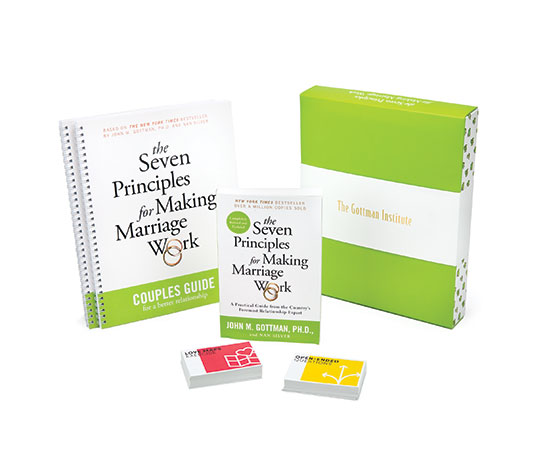
A new and improved version of our Seven Principles Couples Set for use in workshops, clinical practices, and at home. Physical Materials.

Related posts

A couple in a kitchen, working through weaponized incompetence together

Is It Weaponized Incompetence?

Alexander Elguren

Your Partner Offers to Help. You End Up With One More Job.

Read More

6 Things That Predict Divorce

The 6 Things That Predict Divorce

John Gottman

The first step to improving your marriage is understanding why relationships fail.

Read More

A young couple putting across their point of view and could be succumbing to common couples conflict mistakes that occur during conflict

Three Common Mistakes Couples Make During Conflict

Andrew G. Marshall

If you want to stop arguing all the time, avoid these mistakes

Read More

Managing vs. Resolving Conflict in Relationships The Blueprints for Success

Managing vs. Resolving Conflict in Relationships

Marni Feuerman

A look at three “conflict blueprints” to help you and your partner constructively manage conflict around unsolvable problems.

Read More

A group of people having a respectful and mindful conversation about political topics.

Mindfulness Tips for Hard Conversations

Gillian Florence Sanger

You can do more than "agree to disagree." Learn how to communicate with shared humanity and boundaries in mind.

Read More

Distressed woman experiencing emotional conflict as her husband yells, highlighting relationship tension and communication issues.

Why Is My Husband Yelling at Me?

Kendra Han

Understanding the behaviors and taking action in the areas you can control will help your wellbeing.

Read More

Improve your Relationship Skills with our Free Newsletters
0