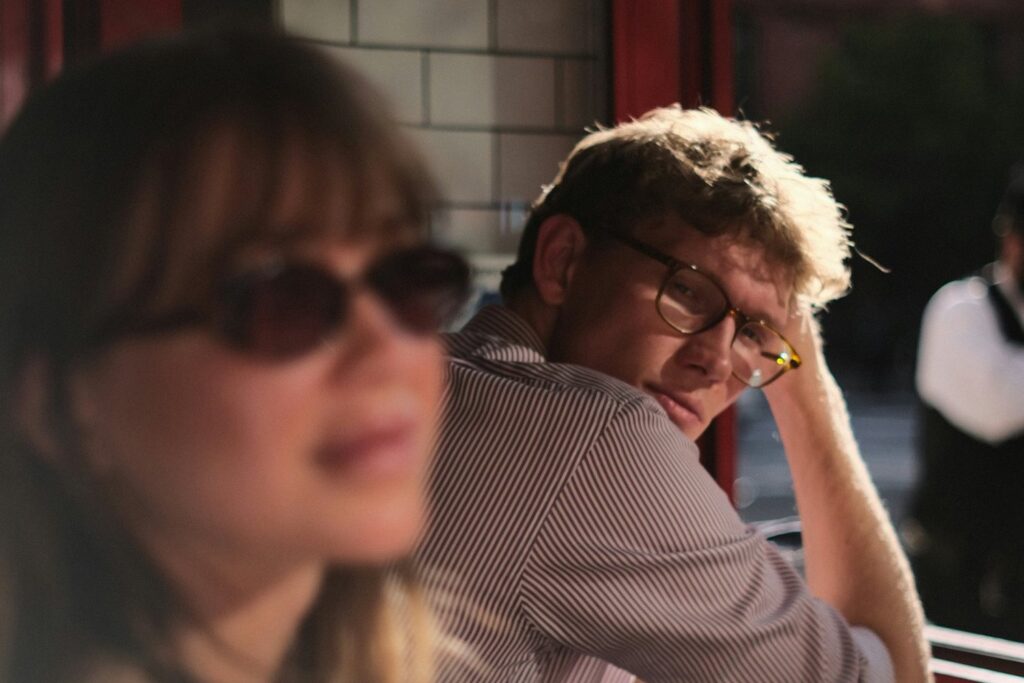
A red-haired woman dropped her wet umbrella on Wes’s foot in the line at the coffee shop. She apologized and, leaving, gave him a broad smile that surprised him and lifted his mood. The next day they ended up at neighboring tables. Her name was Tess, and like him she loved silent films. She was single and worked as a data analyst in the next town. What, Wes thought, could be more innocent than talking about movies with someone at the next table? Wes saw to it that his wife, Rachel, came up more than once. Within six months, he would be keeping a far bigger secret from her.
What Is “Emotional Cheating”?
Cleveland Clinic defines “emotional cheating” this way: “a type of an emotional affair that involves developing a close, emotional connection with someone other than your partner without fully disclosing the existence of that connection.”
Chivonna Childs, PhD, whom the clinic quotes, puts the line at chemistry or physical attraction, or at thoughts and fantasies about the person that never stop. Past that point, she says, these relationships “cross the friendship boundary into emotional cheating territory.”
The clinic suggests two questions to ask yourself. One is how you would feel if your partner made “those same decisions you’re making.” The other is whether the interactions “support or harm your relationship.”
Does Wes’s friendship with Tess already count? John and Julie Gottman’s research has not treated “emotional cheating” as a category of its own. But their four decades of research cover how couples build and lose trust.
Wes and Rachel come from What Makes Love Last?, where John Gottman tells the story of a couple based on many couples he has studied at the Love Lab. Their story ends in a full affair, which goes further than “emotional cheating.” Before that, Wes was building a close connection with Tess that he never fully disclosed to Rachel. That part fits Cleveland Clinic’s definition. To see how he got there, we start with his marriage.
Emotional Literacy
For anyone who wants to get more comfortable with emotions.
When Bids for Emotional Connection Keep Being Turned Away
When Wes married Rachel, he was a well-established photographer who supported her through cooking school. Ten years later, the digital revolution had hit his business hard. His wife, Rachel, had just become head chef at a respected restaurant. She was thrilled and afraid she would not measure up. Each time she confided that fear, Wes brushed it aside and told her to be more positive. He thought he was supporting her. Rachel heard condescension, and said nothing about how much it hurt. Wes was full of doubt himself. Had anyone asked them then, both would have ruled out an affair.
Jinashree Rajendrakumar lays out a pattern like this in How Do Affairs Happen?. She calls it the Gottman-Rusbult-Glass Cascade. It has eight steps that play out over time. Here we follow only the overall trajectory, and her article covers every step in full. The cascade starts when emotional bids are “met with turning away or against instead of turning toward.” In her words, repeated failed bids make trust erode “gradually.”
A bid for emotional connection is a gesture, a question or a confidence that asks a partner for attention or support. In Gottman terms, each time Rachel confided her fear, she was making a bid. Each time Wes answered with cheerful advice, he was turning away.
Further down the cascade comes the negative comparison, which Brandon Leuangpaseuth, who writes about his own affair in What to Do After an Affair, defines as “a harmful comparison of one’s partner to someone else.”
Too Close to Someone Else
The weeks went by. The table became theirs. Wes began shaving with extra care on the days he hoped to see Tess, without admitting why even to himself. Tess told him online dating had not worked out. “I can’t believe someone as great as you can’t get a date,” Wes said. Then he caught himself.
When a Chaplin festival came to the local cinema, asking Tess seemed only natural. Rachel was busy at the restaurant and hated silent films anyway. Soon they were going to the movies, always on nights when Rachel worked late. Wes never mentioned Tess to Rachel. She might misunderstand, he thought. He called it a small secret. Tess knew he was married, and he told himself he was doing nothing wrong.
In #AskGottman: Affairs Answers, Don and Carrie Cole explain where emotional infidelity begins: “In the Gottman Method, we believe it starts when a person gets too close to someone other than his or her relationship partner.”
Walls and Windows
Wes began to confide in Tess about his marriage. He also told her something Rachel did not know: he was hoping for a good position at an advertising agency. When the job went to another candidate, he was so crushed that Rachel could see something was wrong. “If you had told me about it,” she said, “maybe I could have helped you prepare for the interviews. Even if you don’t think so, I know a thing or two myself.”
Wes said, “I don’t need your help.”
The next day Tess hugged him and praised his photographs without reservation. She made him feel believed in. Rachel, he told himself, did not. In his eyes, Tess was now prettier and sexier than Rachel. She was also much kinder to him.
Dr. Shirley Glass spent more than two decades studying infidelity. In her book Not “Just Friends”, she uses walls and windows as an analogy for a healthy marriage: a wall keeps outsiders from invading the couple’s heart, and a window keeps the partners open to each other. Rajendrakumar describes the result: “The window between the partners is replaced with a wall, as the window opens up to outsiders.” She adds: “Secrets begin with omission.” Wes had kept Tess from Rachel. Now he had kept the interviews from her too.
What People Seek in an Affair
Eventually Wes and Tess became lovers. On the question of whether affairs are the root cause of divorce, Dr. John Gottman writes in The Seven Principles for Making Marriage Work: “In most cases, it’s the other way around. Problems in the marriage that send the couple on a trajectory to divorce also send one (or both) of them looking for intimate connection outside the marriage.” He adds that secret meetings between lovers, which he calls trysts, “are usually not about sex but about seeking friendship, support, understanding, respect, attention, caring, and concern.”
Where Does “Emotional Cheating” Begin?
For a long time, nothing in Wes’s story looks like cheating. Rachel’s fear kept getting cheerful advice. Wes began to measure his wife against Tess. Then he started hiding the movie nights, and later the interviews. Once he was hiding the closeness, his friendship with Tess fit Cleveland Clinic’s definition of “emotional cheating.”
It did not have to go that way. Wes could have told Rachel about the woman at the coffee shop. Telling her would have meant owning up to more: her new job had left him feeling vulnerable, and he could not face that even in his own mind. Staying silent took away her chance to show him support and love.
Missed bids, small secrets and unkind comparisons can turn up in any marriage, and they do not make anyone a cheater. The danger lies in repetition: over months they pile up, until the person you confide in most is no longer your partner. A couple that knows the steps can spot them and break the pattern before it ends in an affair.
Couples who want help have places to start. The Gottman Institute lists Gottman-trained therapists, and John Gottman’s The Seven Principles for Making Marriage Work teaches couples to turn toward each other. Our couples’ resources offer more tools.
Further reading: Kyle Benson draws the line between friendship and betrayal in 3 Betrayals That Ruin Relationships (That Aren’t Infidelity). Mac Stanley Cazeau explains the Trust Revival Method in Can a Relationship Survive an Affair?, Terry Gaspard sets out what each partner can do in How to Build Trust with Your Partner After Infidelity, and Brandon Leuangpaseuth continues his own story in Reviving Trust After an Affair.
Sources: Cleveland Clinic, “Emotional Cheating” (July 18, 2024), for the definition, the two questions and the quotations from Chivonna Childs, PhD. John Gottman, The Seven Principles for Making Marriage Work, for the quotations on affairs, divorce and nonsexual betrayal. John Gottman, What Makes Love Last?, for the story of Wes, Rachel and Tess, with the names changed; there Gottman attributes the walls-and-windows framework to Shirley Glass. Shirley Glass, Not “Just Friends”, where she sets out walls and windows, described by CBS News. Jinashree Rajendrakumar, How Do Affairs Happen?, for the Gottman-Rusbult-Glass Cascade.
Frequently Asked Questions
Cleveland Clinic defines it as a type of emotional affair that involves developing a close emotional connection with someone other than your partner without fully disclosing that the connection exists.
Cleveland Clinic counts it as a form of infidelity, because it can break the trust and emotional connection between partners. According to Don and Carrie Cole, in the Gottman Method, an emotional affair starts when a person gets too close to someone other than his or her relationship partner.
Cleveland Clinic calls close bonds with friends and coworkers normal in a healthy relationship. Chivonna Childs, PhD, places the line at chemistry or physical attraction, or where thoughts and fantasies about the person never stop. Kyle Benson’s yardstick is whether your partner would be upset by the things you have shared or uncomfortable watching the interaction.
Cleveland Clinic lists hiding or deleting messages involving the person, getting defensive when they come up, comparing them with your partner and finding your partner lacking, and no longer having deep conversations at home.
Yes, but the help depends on what has happened. The Gottmans’ research has not treated “emotional cheating” as a category of its own. Dr. John Gottman does write in The Seven Principles for Making Marriage Work that “Nonsexual betrayals can devastate a relationship as thoroughly as a sexual affair.” For couples recovering from an affair, Dr. John Gottman and Dr. Julie Gottman developed the Trust Revival Method, which has three phases: Atonement, Attunement and Attachment. Dr. John Gottman presents it in the book What Makes Love Last?. A Gottman-trained therapist, found through Find a Couples Therapist, can help a couple judge how much of it fits their situation. Couples who want to work on trust together at home can start with the Gottman Relationship Adviser, a research-based questionnaire and improvement plan that covers trust, or attend The Art and Science of Love workshop.