
As parents, it’s easy to fall into the trap of believing we need to “get it right” all the time. We want our children to succeed, to be confident, and to avoid struggle whenever possible. But what if struggle isn’t something to avoid? What if it’s actually where growth begins?
The term “growth mindset” was coined by Stanford professor, Carol Dweck, in her child psychology research. It has more recently gained traction in the educational system as well as parenting circles.
What is growth mindset?
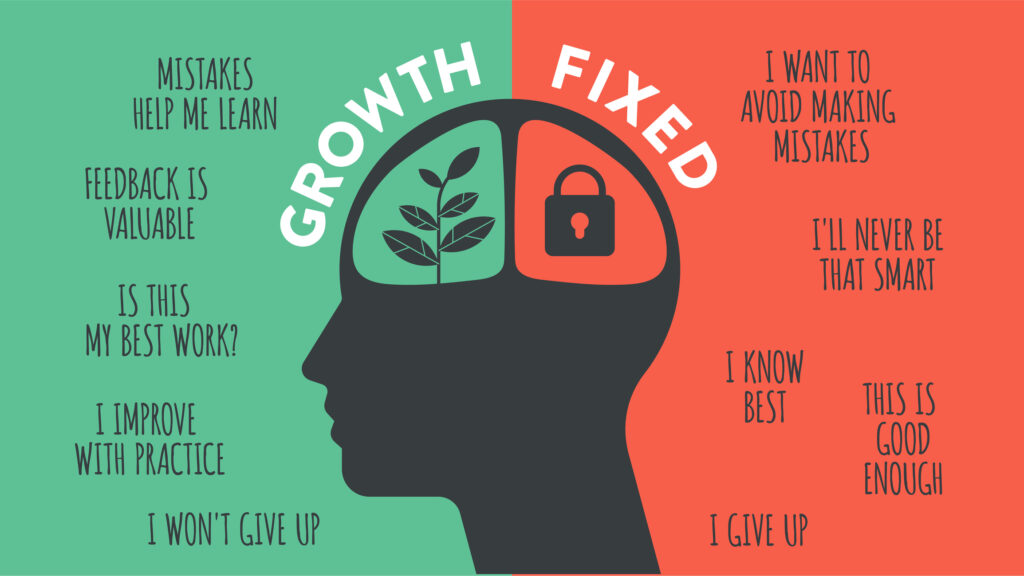
A growth mindset—the belief that abilities can be developed through effort, learning, and persistence—offers a powerful framework for raising resilient, emotionally intelligent children. Children thrive when parents focus on connection, coaching, and learning—not perfection.
How to develop a growth mindset
Many parenting challenges come from focusing on outcomes: good grades, good behavior, quick compliance. But when we prioritize performance over process, children can begin to believe that their worth is tied to getting things “right.” Instead if we, as parents, encourage our children’s effort instead of outcome, we will promote a growth mindset in them.
This means we might shift our conversations with them:
- From “Did you win?” to “What did you learn?”
- From “Why didn’t you do better?” to “Keep trying”
When children understand that effort matters more than immediate success, they become more willing to take risks, persist through difficulty, and try again after setbacks.
Emotions Coaching and Growth Mindset
Dr. John Gottman’s approach of emotion coaching dovetails nicely with the concept of growth mindset. Emotion coaching is about helping your child recognize their feeling, naming the emotion, showing empathy and limit setting.
When your child is frustrated, overwhelmed, or upset, you might want to fix the problem quickly or shut the emotion down because it is easier in the moment. However, these moments are where growth happens. You are helping your child develop emotional intelligence and learn to understand, acknowlegde and process their feelings.
Instead of saying:
- “Calm down, it’s not a big deal”
Try:
- “I see this is really frustrating for you. Let’s figure it out together.”
This is emotion coaching in action. You’re teaching your child that:
- Feelings are manageable
- Problems can be worked through
- They are capable of learning new ways to cope
Over time, children internalize this process. They don’t just get through hard moments—they grow from them.
Normalize Mistakes
One of the most powerful ways to build a growth mindset is to change how we respond to mistakes—our children’s and our own.
When a child makes a mistake, the goal isn’t to eliminate the error. It’s to explore it.
You might say:
- “What do you think you could try differently next time?”
- “That didn’t work—what’s another idea?”
Just as important: let your child see you make mistakes and recover from them.
- “I got really frustrated earlier. I’m working on taking a breath before I respond.”
- “I made an error, but I will keep working on it.”
This models resilience in real time. It teaches children that mistakes are not failures but rather part of learning.
Growth doesn’t happen in one big moment. It happens through small, repeated interactions over time.
A simple acknowledgment of effort:
- “You really stuck with that, even when it was hard.”
These small moments build a child’s internal narrative:
I can improve. I can handle challenges.
The benefit of having a growth mindset
When children are raised with a growth mindset, they develop more than just resilience. They build:
- Confidence grounded in effort, not praise
- Emotional intelligence, through coaching and connection
- Problem-solving skills, from navigating challenges
- A sense of security, from receiving support as they learn
Kids begin to see themselves not as “smart” or “not smart,” “good” or “bad,” but as people who are capable of growth and learning. They don’t let past behavior limit them; they are always learning and expanding what’s possible.