0

How Stress Affects Relationships

When couples fight, they can get flooded. Learn how to navigate stress and conflict so that you don't damage your relationship.

Stressed couple in conflict

The Role of Flooding in Conflict

Even happy couples fight – and sometimes they do it in a way that doesn’t align with their integrity or intentions. Yelling, stomping out of the room, or acting like a “stone wall” during upsetting conversations can occur with even the most loving couples. Often, after these upsetting events, couples will say something like “I don’t know why I say those things when I’m mad… I don’t mean it” or “I wish I was a better listener, I don’t know what happens to me when we argue…it’s like I blackout” or “Of course I want to be able to have these conversations but whenever I try, I get so frustrated that I just have to leave the room”.

Diffuse Physiological Arousal 

When Gottman Method Couples therapists hear of these types of interactions occurring between partners, they begin to consider that something called “diffuse physiological arousal” (DPA), often referred to as “flooding”, might be at play. 

Flooding is the body’s response to a threat.  When someone is flooded, their body begins to release stress hormones. These stress hormones change the way the body and mind operate. When it comes to the body, breathing begins to change, muscle might tense up, the heart races (on average above 100 BPM), and we might experience dry mouth or a need to urinate more frequently. 

At the same time, the mind is also changing. We become more self focused in an attempt to protect ourselves. This means we are more likely to utilize some of Gottman’s Four Horsemen – saying critical things instead of discussing topics with kindness, becoming defensive instead of being able to lead with curiosity, shutting down or stonewalling instead of showing openness, and becoming contemptuous instead of discussing our own pain.In a flooded state, it becomes more difficult to act in a way that promotes relational wellbeing – showing affection, humor, curiosity, or problem solving. 

What Are You Really Fighting About?
For anyone who wants to communicate more clearly.
Subscribe to our Love Notes Newsletter Get regular relationship tips and resources from the experts, plus a monthly free couples exercise and access to special pricing on Gottman products. to receive your free exercise.

Internal and External Causes of Flooding

In relationships, you might become flooded due to external or internal stressors. An external stressor is a stressful experience that originates outside of the relationship. This includes being worried about losing your job, facing traffic on the way home, or learning that one of your parents needs to be put into hospice care. An internal stressor originates from within the relationship – perhaps you and your partner have been distant recently, have been having less sex, or are arguing more frequently. 

When either internal or external stressors go beyond our ability to regulate them we experience what’s called “self regulation depletion” which results in a flooded state. When people are experiencing high levels of stress outside or inside of the home, they are more likely to be snappy with each other and less likely to solve their problems effectively. 

How to Navigate Stress + Flooding

When John Gottman conducted research on couples, he found that when someone is flooded it takes approximately 20 minutes (on average) away from the stressor  for the stress hormones to leave the bloodstream. When you are experiencing a flooded state with your partner, it’s important to take a break and do a self soothing activity.If you notice your partner is experiencing a flooded state, it can be helpful to allow them to take space, to be calm and reassuring with them, and to recognize they are in a stressed state and that their difficult talking with you is not “purposeful” rather it is driven by a physiological state.Most of us have difficulty doing this which is why I wrote my book Til Stress Do Us Part.

If you’re in an argument and one of both of you is checked out, yelling, or stomping out of the room, try to follow this plan instead:

  • Ask for a break.

  • Take at least 20 minutes for a break so that you can move out of the state of diffuse physiological arousal. Agree to a time when you will come back and discuss. 

  • Do a Stress Relieving Activity

  • During the break do a stress relieving activity like taking a walk, writing in a journal, or taking a shower.

  • Avoid texting your partner, calling someone on the phone to talk about how mad you are, or googling about whatever topic initiated the argument. You need to take space from the stressor.

  • Offer Repair When Coming Back Together

  • When you return to each other, take a moment to reassure the other person you’d like to try to have the conversation again. Offer some repair, like apologizing for your part. It is crucial you come back together after a disagreement. This builds trust and safety.
  • During your conversation, use gentle start up, by expressing your feelings and needs and talking for yourself using “I” statements. 

If you’re experiencing a lot of stress in your lives and you’ve noticed it has impacted the way in which you connect at home, it’s important to work to reduce stress spillover by:

  • Making a list of your stressors to review so you can consider how to navigate them differently as a couple
  • Consider what you can shed, what you can prevent, and what you must adapt to.
  • Create a plan together to reduce stress by shedding obligations and tasks that are not necessary, preventing issues that can be prevented, and adapting through utilizing stress reduction techniques to the things you cannot change.


As you and your partner work to navigate stress together, you will build stronger “muscles” for managing flooded states and protecting your relationship from stress. 

If you’re struggling with stress in your relationship, don’t wait until it causes lasting damage. Explore more resources on stress management and relationship health at Gottman Inc.
 

Ask Gottman

Your email address will not be published. Required fields are marked *

Elizabeth Earnshaw is a Licensed Marriage and Family Therapist & Certified Gottman Therapist. She is the author of “I Want This To Work: An Inclusive Guide to Navigating the Most Difficult Issues We Face in the Modern Age.” Elizabeth owns A Better Life Therapy, LLC in Philadelphia, PA, and is the head therapist at Actually, a modern premarital counseling company. Elizabeth is passionate about relational wellness and believes that when we have the tools to succeed in our relationships, it can make an immense difference in the quality of our lives. You can follow her on Twitter or Instagram for daily relationship tips.

Recommended products

Original price was: $250.00.Current price is: $189.00.

The Gottman Relationship Adviser is a complete approach to relationship wellness. Measure your relationship health with the research-based Gottman Assessment, analyze five key areas of your partnership to identify your strengths and weaknesses, then start a tailored, step-by-step digital program proven to heal and strengthen your connection—all on your schedule and from anywhere.

The Adviser uses the legendary scientific Gottman Method to help you understand what’s really going on in your relationship—and gives you exactly what you need to improve it.


Original price was: $149.00.Current price is: $99.00.

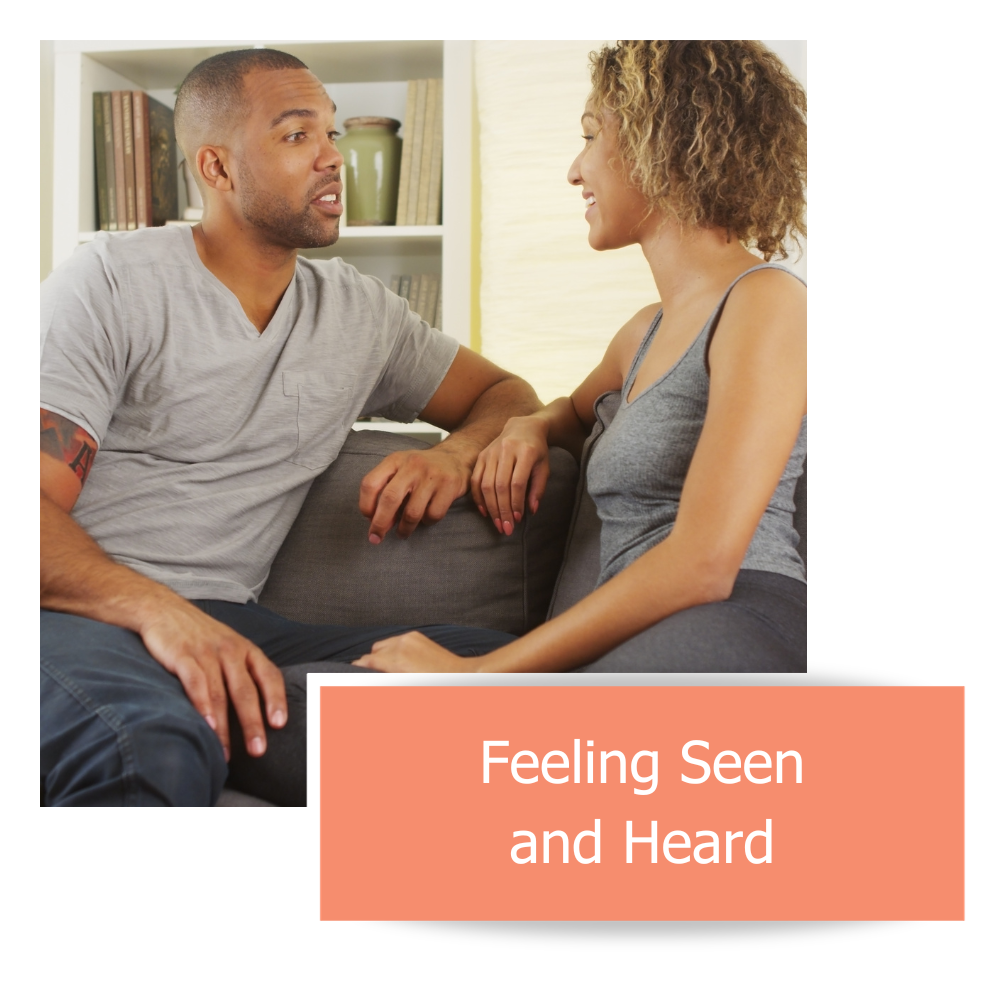
Do you feel seen, heard, and valued by your partner?  One of the many benefits of a happy and healthy relationship is the feeling that you have someone who really “gets” you. But everyone has areas they could improve on, or be more intentional in their relationship. That’s what Feeling Seen and Heard, from the Gottman Relationship Coach, is all about. Learn from Drs. John and Julie Gottman how to be seen and heard, how to become a better listener and how to Turn Towards your partner more often in this series of videos and exercises.

When you show up for your partner, and when you feel seen and heard, your connection will deepen and you can even reduce your stress! 

This new program will help you learn:

  • How to identify and share your truth
  • About what we call Bids for Connection, and the three ways you can respond to them
  • How to Turn Towards your partner to make your relationship successful.
  • A concept of an Emotional Bank Account and positive emotions, and how to
    increase the balance in your Emotional Bank Account
  • How to identify and express your needs in the relationship
  • How to be a great listener
  • How to have a stress-reducing conversation

“Buy Now” will take you to GOTTMAN CONNECT to purchase and view this product.

Original price was: $298.00.Current price is: $139.00.

Drs John and Julie Gottman are excited to introduce this  Gottman Relationship Coach collection, All About Conflict.

The first program, “Dealing with Conflict”  teaches the basics of communication in conflict. You will learn which of the problems your relationship faces are solvable, and which you may continue to encounter. If any of these perpetual problems have you stuck, the Gottmans can help you get “unstuck” and understand each other’s perspectives. “Dealing with Conflict” helps prepare you for the regular, inevitable moments of friction that are bound to arise in any relationship.

The second program, “What to Do After a Fight” teaches how to navigate more difficult arguments and the feelings that come along with them. If “Dealing with Conflict” makes regular communication “smooth sailing,” “What to Do After a Fight” helps you address rough waters to keep your relationship from capsizing. Often, more serious arguments arise because they touch on values and beliefs one or both of you hold dear. Explore what’s underneath the storm with the game-changing exercises contained in this program. 

NOTE: If you already purchased “Dealing with Conflict” or “Making Up After an Argument” individually and want to take advantage of this special offer, make sure you are logged in to your Gottman Connect account and the price difference will automatically be deducted from your purchase of the second program.

Related posts

One partner using AI to get relationship advice while her partner sits nearby.

When AI Makes Couples More Certain, But Not More Connected

Dana McNeil

AI can offer relationship advice, but can it build connection? Explore how relying on AI may reinforce assumptions rather than foster understanding between partners.

Read More

A woman rests against a man as he kisses the top of her head.

We Agreed. Why Are We Having This Argument Again?

Alexander Elguren

In relationship conflict, we often start persuading before we’ve finished listening. Understanding the three stages of a fight can change how we handle the next one.

Read More

A woman sits on a mustard-colored sofa while a man stands behind her.

Who Has to Calm Down First?

Alexander Elguren

One partner wants to keep talking. The other can’t take in another word. How couples can practice emotional regulation when they disagree about how to disagree.

Read More

Emotional cheating: a woman alone at a coffee-shop table, hand against her cheek, behind a dark pillar

How a Coffee-Shop Friendship Can Turn Into Emotional Cheating

Alexander Elguren

He told himself it was innocent. He didn't tell his wife.

Read More

A woman with curly dark hair in a white shirt looks at the camera while a man in a dark shirt holds her from behind, his face turned toward her.

The Sex Stopped. Neither of Them Said Anything.

Alexander Elguren

Why revealing yourself matters more than revealing lingerie.

Read More

Four people at a dinner table by an open window at sunset, one couple looking at a book together while the other two sit apart

You Still Get Along. It Might Still Be Roommate Syndrome.

Alexander Elguren

What the Term Means, and Why Marriages Like These Can Have a Renaissance.

Read More

Improve your Relationship Skills with our Free Newsletters
0