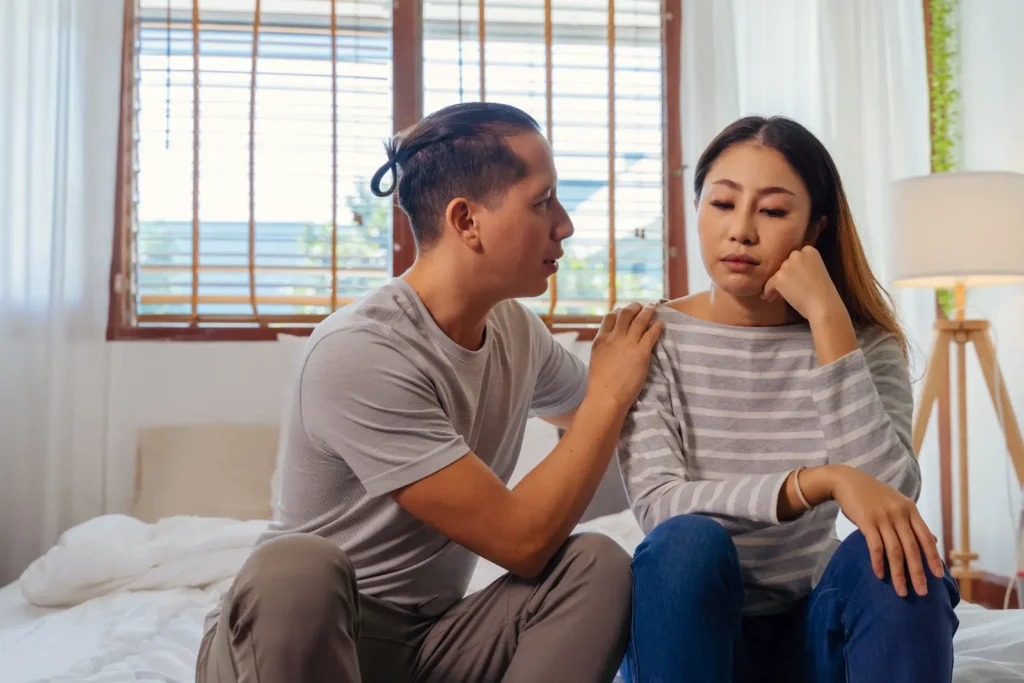
The latest research in neurobiology shows that emotional safety is one of the most important aspects of a satisfying connection in a loving relationship. We need to feel safe before we’re able to be vulnerable, and as Brené Brown reminds us, “Vulnerability is the birthplace of love, belonging, joy, courage, empathy, accountability, and authenticity.”
Some people get turned off by the idea of prioritizing safety in their relationship because they equate a “safe” relationship with a “boring” one, but it turns out that the secure relationship we all long for is cultivated best when we feel safe.
What is emotional safety?
Stephen Porges, Ph.D., a pioneer in the field of neuroscience and one of the world’s leading experts on the autonomic nervous system, confirms that we have an imperative for safety deeply wired into our minds and bodies.
Porges’ Polyvagal Theory describes how our autonomic nervous system mediates safety, trust, and intimacy through a subsystem he calls the social engagement system. Our brain is constantly detecting through our senses whether we are in a situation that is safe, dangerous, or life threatening.
When our body and mind experience safety, our social engagement system enables us to collaborate, listen, empathize, and connect, as well as be creative, innovative, and bold in our thinking and ideas. This has positive benefits for our relationships as well as our lives in general.
Most couples I see in my practice aren’t dealing with life threatening situations. Instead they are navigating chronic relationship disconnection, tension, defensiveness, or irritability that signals danger to their senses, which ultimately takes a toll on their relationship.
What does emotional safety look like?
Our brain’s ability to be aware of these signals is a phenomenon called neuroception, a term coined by Porges to describe how our nervous system relies on feelings in our body to assess our level of risk and safety. This awareness lies outside of conscious thought. Our brains are wired to provide a continual analysis of information through our senses to decide how and when to initiate and be open to connection with each other.
When we perceive safety through neuroception, our social engagement systems can function and help us create warmth and connection. When we perceive danger, all our resources move towards assessing the level of danger we may be in and protecting us from it.

FREE Download | Emotional Literacy
Sign up for the Gottman Love Notes Newsletter to receive your free guide on emotional literacy. Learn about emotional intelligence, meta-emotions, and how to express feelings in a healthy way.
The subtle threats of disconnection
Christine and Jack, married and in their late thirties, both have high-stress jobs and travel a lot for work, sometimes spending weeks apart from each other.
When they finally reunite, instead of feeling joy and connection, they argue. The cycle goes like this: Jack is critical, Christine counter-attacks, Jack gets flooded and shuts down, Christine feels abandoned. Neither partner feels secure.
We role play a reunion scenario in my office. Their faces, voices, and bodies are tense, reflecting the anxiety they feel inside. Christine and Jack are signaling danger to each other without even realizing it. As humans, we have a capacity to sense threat at its most subtle levels, beyond logic or cognition. This deeply wired system is firing whether we want it to or not.
Neuroception also mobilizes our defenses when we detect a threat, which is what’s happening with Christine and Jack. Even though they “know” cognitively that they’re safe with each other, their senses are receiving very different information through each other’s voices, eyes, facial expressions, and body language.
When we don’t feel safe, our bodies don’t want to engage, connect, or provide the emotional warmth our relationships need in order to thrive.
Creating a secure and safe bond
How does a couple convey emotional safety to each other under stress? How do they consciously pave the way for a connection that leaves them inspired and wanting more?
Stan Tatkin, PsyD, the developer of the Psychobiological Approach to Couple Therapy (PACT), incorporates neuroscience to teach couples how to recognize the safety and security system of their relationship to create and maintain lasting love.
In learning how to cultivate a sense of safety on a neuroceptive level, Christine and Jack began to intentionally communicate feelings of interest, acceptance, and love to each other.
They focused on being more intentional about greeting each other in a way that reassured and invited the other in. As they practiced this, their eyes and faces softened, and their voices became calmer and friendlier. Soon, a new way of connecting was possible between them.
Instead of dreading their reunions, they begin to look forward to them.
The beauty of a nervous system that helps us survive life threatening events is that it also supports us in deepening our feelings of closeness and connection with one another.
Our relationships are far from boring when we feel safe. Emotional safety enables us the freedom to collaborate, dream, be wildly creative, share bold ideas, feel increased compassion, and express ourselves freely with one another.
The more we understand how our bodies play a role in our relationships, the more we can make them work for us instead of against us.