Lose all three, and the usual date-night advice is the wrong place to start. In Gottman’s own definition, romance and passion together are simply intimate trust.
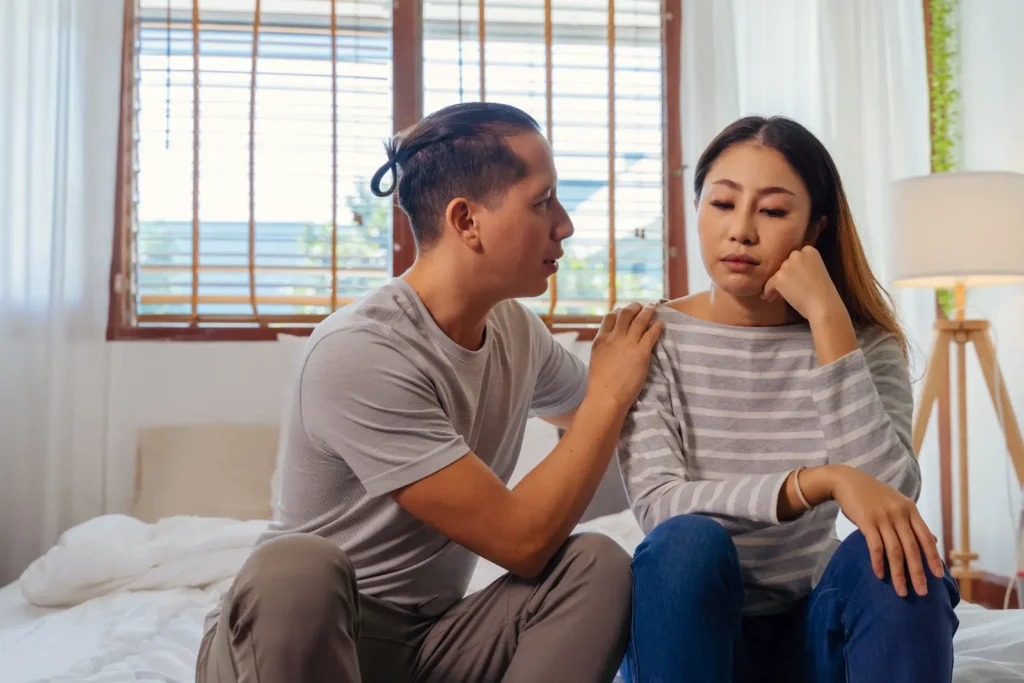
They still split the school pickups and ask about each other’s day. From the outside, nothing looks wrong. But they have gone quiet with each other. They let the romance slide first, then stopped confiding, and somewhere along the way they stopped reaching for each other in that way too, so gradually that neither could name the week it changed. If you are searching for how to rekindle a relationship when romance, intimacy, and passion have all been gone, you are probably not after one more date-night tip. You want a way back. There may be one, and couples like this tend to find it in a particular order.
What does it mean when romance, intimacy, AND passion are all gone?
Couples rarely lose all three at once. More often a couple slides into what many people call roommate syndrome: kind, coordinated, and quietly disconnected. They run the household well. They may rarely fight. But they have stopped tending the friendship underneath, and in Gottman’s research the couples who keep that friendship are the ones who keep romance and desire alive. He found that most new parents lose some of it, and only about a third stay satisfied with sex, the third who made alone time and talked about more than the chores. In the Sound Relationship House, the lower floors are the everyday habits of knowing each other and turning toward each other, and trust and commitment are the two walls. A couple that stops tending the friendship usually stops protecting the trust between them too. A couple can rebuild all of it, which is the hopeful part of the diagnosis.
Romance vs intimacy vs passion: what’s the difference, and which one disappears first?
The three are easy to confuse, but they are not the same thing. Emotional intimacy is the closeness of being known, the sense that your partner is safe with your inner world. Romance is the attention you show on purpose, the small gestures and rituals that tell someone they matter. Passion is the wanting. In long relationships, couples tend to lose them in a telling order. They drop the romance first, quietly, under the weight of work and parenting. They stop confiding next, and once the talk is all logistics, they barely know each other anymore. They usually lose the passion last, and get it back slowest, because few people feel desire for a partner they no longer trust or feel close to.
Why most ‘rekindle your relationship’ advice fails for couples like this
Open most rekindling articles, and the first advice is about passion: plan a weekend away, schedule sex, change the lingerie. Gottman’s research turns that around. The late sex therapist Bernie Zilbergeld studied a hundred couples over forty-five to find which techniques kept passion alive with age, and to his surprise technique was not the difference at all. The satisfied couples differed in one way: a closer friendship, and a decision to make sex a priority. Gottman is just as blunt about the popular idea that a little distance keeps desire alive. In long love, he found, couples do not protect desire by holding each other at arm’s length; they lose it. As he puts it, revealing lingerie can jump-start a romantic evening, but revealing yourself is what keeps the passion alive over the years.
Want the friendship-first approach in your inbox? Sign up for Love Notes, the Gottman newsletter for couples, and get the free exercise What Are You Really Fighting About? to start the conversation you build the rest on.
How to rekindle a relationship in the right order: emotional intimacy first, then romance, then passion
If a couple lost the layers in order, they tend to rebuild them in order too, and in Gottman’s research that order starts deeper than most advice admits.
Start by rebuilding trust and attunement. In What Makes Love Last?, Gottman places trust at the foundation and calls attunement the way back: the desire and ability to understand and respect your partner’s inner world, and to notice their bids for connection. The mechanics are small and measurable. In his newlywed study, the couples still together six years later had turned toward each other’s bids 86 percent of the time, against 33 percent for the couples who later split. So build the emotional safety that lets each of you say something true, turn toward your partner in what Gottman calls the sliding door moments, the small everyday instants when they reach for your attention and you choose to meet it or miss it, and make repairs quickly when one of you gets it wrong, what Gottman calls the life jackets of a relationship. Keep his correction in mind: real closeness is not better communication, it is understanding each other deeply and saying so with care.
Then romance. Once each of you trusts that closeness is safe, your partner can receive the gestures instead of bracing against them. Here you can finally use the familiar tactics, and you will find plenty of them in our guide to rekindling passion.
Last, passion. Gottman defines it plainly: passion is the charge of wanting a partner you still find magnetic and still honor as unique and irreplaceable. Put romance and passion together, he writes, and you get the opposite of impersonal sex. You get intimate trust. That is why a couple cannot simply schedule desire back into the calendar. They rebuild it by rebuilding the trust and friendship underneath it, and you will get more from the approaches in making intimacy feel romantic again than you would have in week one.
Can you really fall back in love after years of distance?
Often, yes, though you may not feel it the way you did the first time. Early on, the two of you ran on novelty and not much knowledge. After years of distance, a couple rebuilds something steadier, built on trust and on actually knowing each other rather than imagining each other. Gottman found that the parents who beat the distance kept up the small affections too, the kissing and closeness outside the bedroom, and stayed satisfied because of it. It takes two willing people and some patience, and you do not have to feel in love before you start. Most couples act first and feel it later. If you want a closer look, here is how couples fall back in love after the distance.
Ready to rebuild it in the right order? Start with the friendship and trust, then the closeness, with the Gottman Relationship Coach program All About Intimacy, or download Sexy Game of Hearts below.