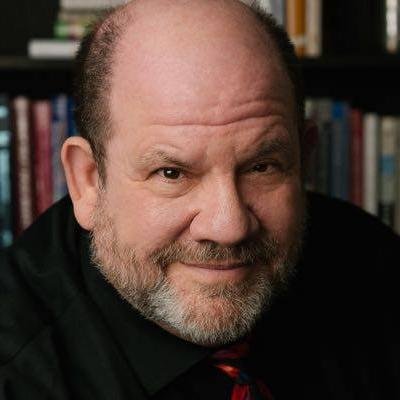
 Interview Guest: Stan Tatkin, PsyD, is the founder of the Psychobiological Approach to Couples Therapy (PACT) and is the author of Wired for Love: How Understanding Your Partner’s Brain and Attachment Style Can Help You Defuse Conflict and Build a Secure Relationship.
People who are insecure desire a relationship, but according to Stan Tatkin, as soon as they begin to depend on someone, “they remember what it’s like and they remember the dangers of depending on someone.”
We are all shaped by the people who have cared for us. The environment of our upbringing influences the way we love and expect to be loved. As Tatkin points out, “When we think of insecure attachment or insecure cultures…we’re talking about adaptation to environment.” To survive an insecure upbringing, we tend to adapt in two ways that mold our capacity for maintaining closeness with our romantic partners.
The Island Culture
If you grew up in an environment that focuses on performances and prioritizes the self over relationship, then you are an “island,” or Tatkin’s version of an avoidant. When you were a kid, your caregiver was unresponsive to your needs, and when you were close with your caregiver, you felt exploited.
So you stopped expressing yourself and became self-reliant. As a result, you hide your true feelings and enjoy alone time as a way to protect yourself from feeling engulfed.
Being close to your romantic partner can feel extra stressful, and especially during conflict. Due to this, your romantic partner often finds you dismissive.
The Wave Culture
If you grew up in a culture that put pressure on you to emotionally regulate at least one parent, you may be a “wave.” Neediness and dependency was rewarded. But the problem is, as Tatkin points out, “the parent is available and then not available.” They are often preoccupied with their overwhelming feelings. This leads to rejection and a sense of punishment. A “wave” child then internalizes and punishes him or herself when a parent is unavailable.
So as soon as you start to depend on someone, your memories of being rejected cause you to cling to your partner, often in a negative way. As soon as you feel hope, you get anxious and angry because your past experiences remind you that it won’t last. Tatkin calls this being “allergic to hope.”
When Cultures Mix
When these two types come together, Tatkin says it’s like “cats and dogs.” They do get along but they “don’t understand themselves. The things that they do that are not consistent with secure functioning and they don’t fully understand their partner as a different animal.”
You may feel you picked a cat that doesn’t like to sit on your lap, and this makes you mad. Tatkin says, “This isn’t by accident.” The partner we selected is a result of familiarity and recognition.
A relationship is a “two-person psychological system.” In this way, partners fight for themselves under the motto, “If it’s good for me and not good for you, too bad.” The “island” partner fights for independence and the “wave” partner fights for togetherness.
A secure relationship is based on true mutuality, and on bargaining and cooperation. The foundation of a secure relationship is the belief that both partners take care of each other simultaneously. Otherwise, it’s painful for both partners. Instead of feeling like adversaries, partners realize they have to team up to make the two-person system work.
For examples on how to understand your “island” or “wave” partner and create a secure relationship, listen to the interview or check out Tatkin’s book titled Wired for Love.