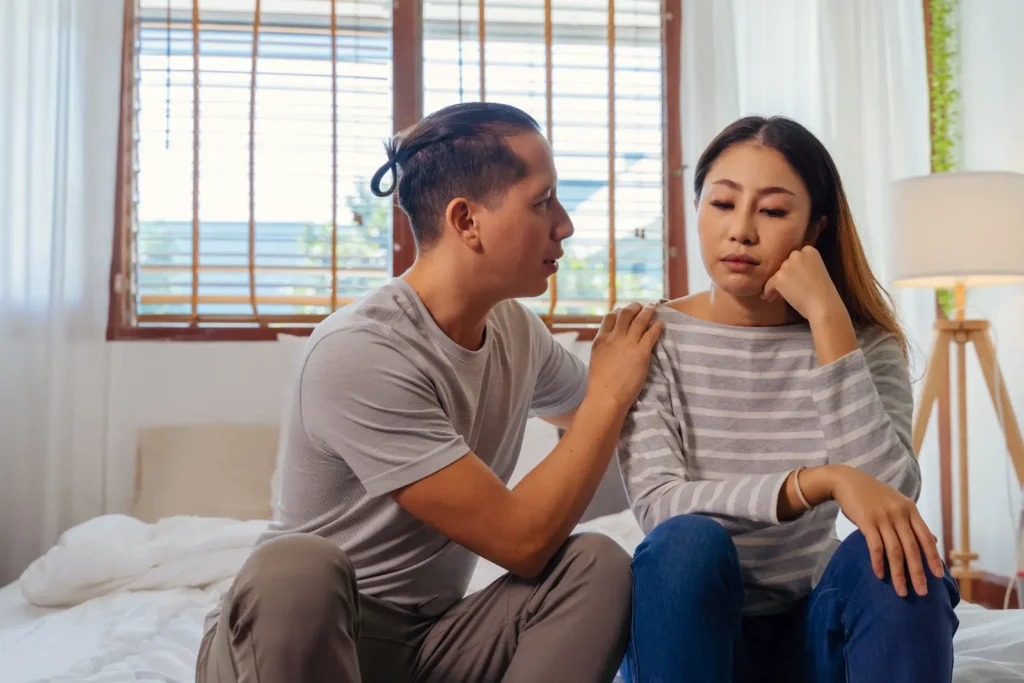
Holidays can be stressful. There may be unrealistically high expectations for the holiday season. People often carry idealized images of what the holidays should look like—magic, harmony, beauty. When reality doesn’t match those expectations, you may feel disappointed.
Causes of holiday stress
The holiday season layers multiple stressors simultaneously:
- Financial pressure (gifts, travel, hosting)
- Rushed schedules
- Increased workload before time off
- Sleep disruptions
- Family conflict or grief resurfacing
When individual internal stress is high, couples have fewer emotional resources to stay patient and connected.
Specific Holiday Couples Stress
With holidays being busy and emotional, couples often:
- Avoid conversations to ‘keep the peace’
- Don’t voice their needs (to avoid disappointing a partner)
- Argue about logistics instead of underlying emotions
- Raise issues during high-stress moments
These patterns can lead to more fights, more withdrawal, or feeling unsupported. So instead let’s be proactive and use the holiday season as an opportunity to strengthen connection with loved ones.
Tips to Create Holiday Connection
Here are some intentional strategies that can bring couples closer together.
Team Up for Challenging Events
Create a strategy before you go in. Talk about potential stressors e.g. challenging relatives. Discuss what support looks like for each of you.
Have each other’s backs
No matter what the conversation or situation, agree to be on your partner’s side. You can use subtle ways to show solidarity, and do not side against your partner. If tensions get high or conversations heated, agree to disengage from it and turn towards one another.
Share a ‘cast of characters’ preview
Give each other a rundown of who’s who and any sensitive topics to avoid when heading into a social gathering or meeting extended family.
Agree on a signal or code word
When there are awkward or uncomfortable interactions, agree to partner as an ally for one another. Plan a discreet way to exit an uncomfortable conversation or leave when needed.
Stay connected during the event
Don’t leave each other for too long without checking in, Share a moment of connection or affection throughout the event.
Understand Each Other Through Family Interactions
Holiday gatherings provide an opportunity to better understand how family shaped your partner into the person they are today. Old family dynamics can resurface when visiting family. Old roles can be reactivated, and people may revert to childhood patterns. This might confuse or frustrate their partner, but it can serve as an important opportunity to better understand them by learning about the family they came from. Observing dynamics among family members can reveal values, traditions, and emotional history.
Approaching family visits with curiosity
Ask questions if you don’t understand something you see. Ask with curiosity vs judgement. Talk to your partner about how you can support one another in potentially triggering environments. Make sure to debrief afterwards.
Build Your Own Holiday Rituals
It is important to develop your own holiday rituals even as you participate in already established ones. Your holidays don’t have to look like anyone else’s. Some of the most meaningful traditions are the ones couples create together—intentionally, thoughtfully, and in ways that reflect who they are today. Building your own rituals gives you a chance to slow down, connect, and infuse the season with shared meaning. When you design traditions that genuinely fit your relationship, you turn the holiday season into something that restores you both.
Why personalized rituals matter
They create meaning, stability, and a sense of “us.” Here are some examples of rituals to try:
- Morning traditions, gift-opening rituals, shared gratitude practices, or end-of-year reflections.
Identify what matters most. Maybe it’s rest, downtime, connection, traditions, and/or boundaries. Make your decisions with these priorities in mind.
Choose activities that energize rather than drain. Say yes strategically and no intentionally. Plan shared moments of joy to balance the intensity of family time.
Protect your well-being as a couple by creating space for quiet moments, intimacy, and regrouping.
The holidays don’t have to be overwhelming. They can be a chance to grow closer as a couple. Release the pressure to create something spectacular—choose to engage in the traditions that genuinely bring you joy, and craft your own rituals to make the season feel meaningful for both of you. This is a wonderful opportunity to practice being unified. Use this time to strengthen your sense of partnership and to remember you’re on the same team!