0

Growth Mindset: Parenting for Possibility

Learn how a growth mindset helps parents raise resilient kids through emotional coaching, effort, and everyday moments that build confidence.

Parent helping child through a difficult situation.

As parents, it’s easy to fall into the trap of believing we need to “get it right” all the time. We want our children to succeed, to be confident, and to avoid struggle whenever possible. But what if struggle isn’t something to avoid? What if it’s actually where growth begins?

The term “growth mindset” was coined by Stanford professor, Carol Dweck, in her child psychology research. It has more recently gained traction in the educational system as well as parenting circles.

What is growth mindset?

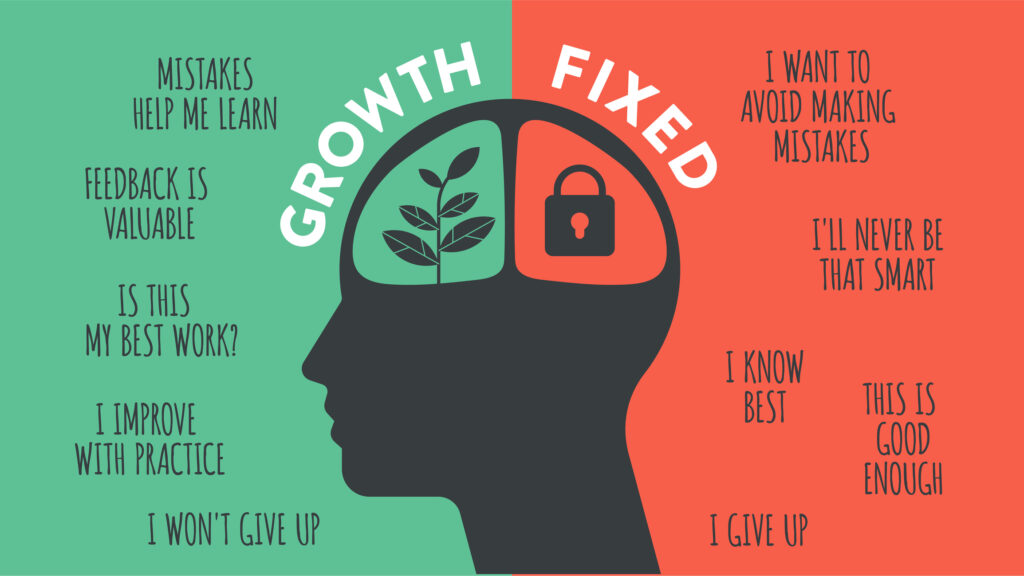
A growth mindset—the belief that abilities can be developed through effort, learning, and persistence—offers a powerful framework for raising resilient, emotionally intelligent children. Children thrive when parents focus on connection, coaching, and learning—not perfection.

How to develop a growth mindset

Many parenting challenges come from focusing on outcomes: good grades, good behavior, quick compliance. But when we prioritize performance over process, children can begin to believe that their worth is tied to getting things “right.” Instead if we, as parents, encourage our children’s effort instead of outcome, we will promote a growth mindset in them. 

This means we might shift our conversations with them:

  • From “Did you win?” to “What did you learn?”
  • From “Why didn’t you do better?” to “Keep trying”

When children understand that effort matters more than immediate success, they become more willing to take risks, persist through difficulty, and try again after setbacks.
Emotions Coaching and Growth Mindset

Dr. John Gottman’s approach of emotion coaching dovetails nicely with the concept of growth mindset. Emotion coaching is about helping your child recognize their feeling, naming the emotion, showing empathy and limit setting. 

When your child is frustrated, overwhelmed, or upset, you might want to fix the problem quickly or shut the emotion down because it is easier in the moment. However, these moments are where growth happens. You are helping your child develop emotional intelligence and learn to understand, acknowlegde and process their feelings. 

Instead of saying:

  • “Calm down, it’s not a big deal”

Try:

  • “I see this is really frustrating for you. Let’s figure it out together.”

This is emotion coaching in action. You’re teaching your child that:

  • Feelings are manageable
  • Problems can be worked through
  • They are capable of learning new ways to cope

Over time, children internalize this process. They don’t just get through hard moments—they grow from them.

Normalize Mistakes

One of the most powerful ways to build a growth mindset is to change how we respond to mistakes—our children’s and our own.

When a child makes a mistake, the goal isn’t to eliminate the error. It’s to explore it.

You might say:

  • “What do you think you could try differently next time?”
  • “That didn’t work—what’s another idea?”

Just as important: let your child see you make mistakes and recover from them.

  • “I got really frustrated earlier. I’m working on taking a breath before I respond.”
  • “I made an error, but I will keep working on it.”

This models resilience in real time. It teaches children that mistakes are not failures but rather part of learning.

Growth doesn’t happen in one big moment. It happens through small, repeated interactions over time.

A simple acknowledgment of effort:

  • “You really stuck with that, even when it was hard.”

These small moments build a child’s internal narrative:

I can improve. I can handle challenges.

The benefit of having a growth mindset

When children are raised with a growth mindset, they develop more than just resilience. They build:

  • Confidence grounded in effort, not praise
  • Emotional intelligence, through coaching and connection
  • Problem-solving skills, from navigating challenges
  • A sense of security, from receiving support as they learn

Kids begin to see themselves not as “smart” or “not smart,” “good” or “bad,” but as people who are capable of growth and learning. They don’t let past behavior limit them; they are always learning and expanding what’s possible.
Emotional Literacy

FREE Download | Emotional Literacy

Sign up for the Gottman Love Notes Newsletter to receive your free guide on emotional literacy. Learn about emotional intelligence, meta-emotions, and how to express feelings in a healthy way.

Ask Gottman

Your email address will not be published. Required fields are marked *

The Gottman Institute’s Editorial Team is composed of staff members who contribute to the Institute’s overall message. It is our mission to reach out to individuals, couples, and families in order to help create and maintain greater love and health in relationships.

Recommended products

Original price was: $250.00.Current price is: $139.00.

The Gottman Relationship Adviser is a complete approach to relationship wellness. Measure your relationship health with the research-based Gottman Assessment, analyze five key areas of your partnership to identify your strengths and weaknesses, then start a tailored, step-by-step digital program proven to heal and strengthen your connection—all on your schedule and from anywhere.

The Adviser uses the legendary scientific Gottman Method to help you understand what’s really going on in your relationship—and gives you exactly what you need to improve it.


Original price was: $119.00.Current price is: $79.00.

Research-based Foundations for a Lifetime of Love.  The Gottman Relationship Coach is an inspiring and educational multimedia experience designed to enhance the well-being of relationships. Participants will be guided through research-based tools and communication skills that can transform relationships—all based on the popular Gottman Method. The first program, “How to Make Your Relationship Work”, is now available and includes:

  • The Gottman Method and How to Make Your Relationship Work
  • How do we predict the future of a relationship?
  • How to build a Sound Relationship House
  • What to do when the destructive Four Horsemen enter your relationship

“Buy Now” will take you to GOTTMAN CONNECT to purchase and view this product.

$599.00

Created by “the Einstein of Love” (Psychology Today), this two-day workshop is grounded on what actually works in relationships that are happy and stable. See for yourself why millions of couples worldwide have benefited from the Gottman Method.

Quote from participant in most recent Live Virtual Workshop:

The Art and Science of Love workshop- where do I begin? It was an absolute stellar workshop. We were looking forward to this for weeks, and it exceeded our expectations! It was well-structured, and well-organized, and provided a wealth of information with real-time demonstrations of how to work through specific scenarios. The outstanding support that was provided throughout the exercises with therapists on standby- WOW! Priceless!

Includes the Art & Science of Love box set.  Please allow time for shipping.  Please Note: This is a live online event. To attend, you will need a reliable internet connection. Our staff will reach out to you with your personal registration and access information.

Related posts

The Good and Bad of Resilience

Alexander Elguren

Resilience can carry a couple through almost anything. The "almost" matters more than it sounds.

Read More

Finding the Right Online Therapy Format for Your Relationship

Alexander Elguren

By now, most couples ask whether online therapy works. Fewer ask what kind of therapy they are actually getting.

Read More

Therapy: Why Human Services Require a Human Connection

Alexander Elguren

In most therapy, the connection that often matters most is the one with the therapist. In couples work, it may not be.

Read More

Bereavement: How Loss Reshapes a Relationship

Alexander Elguren

Loss arrives for one of you. It moves in with both.

Read More

Nature vs Nurture: What Shapes Our Relationships?

Alexander Elguren

Two forces shape who you are. A third decides who you stay with.

Read More

5 Ways Genetics Can Impact Your Relationships

Alexander Elguren

Stress response, bonding, conflict style — all shaped by your genes. So how much of your marriage is, too?

Read More

Improve your Relationship Skills with our Free Newsletters
0