0

3 Do’s and Don’ts for Raising Emotionally Intelligent Kids

With these three steps, you can raise children who are bright, confident, and better able to navigate the intricacies of life.

As parents, we want the very best for our kids. We work hard to raise strong individuals who will go on to lead happy lives and have good moral standing. Sometimes, however, we find ourselves questioning our parenting choices, crossing our fingers and hoping we’re doing this whole parenting thing right.

Our hopes, dreams, and fears about parenting will never cease, but as it turns out, we don’t have to wing it and rely on hope alone anymore. With Emotion Coaching we have a science-based roadmap for how to raise well-balanced, higher achieving, and emotionally intelligent children.

Research by Dr. John Gottman shows that emotional awareness and the ability to manage feelings will determine how successful and happy our children are throughout life, even more than their IQ. Being an Emotion Coach to our kids has positive and long-lasting effects, providing a buffer for the complexities of life that allows them to be more confident, intelligent, and well-rounded individuals.

Below are three do’s and don’ts for building your child’s emotional intelligence.

1. Do recognize negative emotions as an opportunity to connect.
Use your child’s negative emotions as an opportunity to connect, heal, and grow. Children have a hard time controlling their emotions. Stay compassionate, loving, and kind. Communicate empathy and understanding so that your child can begin to understand and piece together their heightened emotional state. Try saying, “It sounds like you’re frustrated! I totally get it,” or, “You seem so angry right now. Is it because Sandy took your toy? I completely understand why you’d be angry.”

Don’t punish, dismiss, or scold your child for being emotional.
Negative emotions are age appropriate and will eventually subside as kids grow. By disregarding their feelings as insignificant or sending the message that their feelings are bad, you are in effect sending the message that they are bad. This damaging perception can stay with them throughout adulthood.

2. Do help your child label their emotions.
Help your child put words and meaning to how they’re feeling. Once children can appropriately recognize and label their emotions, they’re more apt to regulating themselves without feeling overwhelmed. Try using phrases like, “I can sense you’re getting upset” or, “It sounds like you’re really hurt.”

Don’t convey judgment or frustration.
Sometimes our kids can do or say things that are downright unacceptable and it’s hard to understand the emotions that seem unwarranted or irrational. But try putting yourself in your child’s shoes. Ask questions, seek understanding, and convey to them that you’re on their side, you support them, and you’re there to hold their hand through those moments where things feel overwhelming and tough.

3. Do set limits and problem-solve.
Help them find ways of responding differently in the future. Enlist their help in seeking alternative solutions to their struggles. Kids yearn for autonomy, and this is a great way to teach them that they are capable of self-regulating themselves in a world that seems unfair and particularly upsetting. Remind them that all emotions are acceptable but all behaviors are not. Here’s a great phrase to set limits and aid in problem solving: “I understand you’re upset, but hitting is not okay. How can you express your feelings without hitting next time?”

Don’t underestimate your child’s ability to learn and grow.
They have an innate capacity to develop into high functioning adults who can problem-solve and respond intelligently to life’s dilemmas. As children, however, they need a listening ear, a hand to hold, and a parent who can challenge them to reach from within and respond accordingly.

Being a parent is a challenging and never-ending job. With just three small steps, you can raise children who are bright, self-confident, and better able to navigate the intricacies of life with ease and confidence.

Sign Up and Join Our Community!

Sign Up and Become a Super Parent

Become a Super Parent

As a Super Parent you get:

Ask Gottman

Your email address will not be published. Required fields are marked *

April Eldemire is a Licensed Marriage and Family Therapist, Bringing Baby Home Educator, and couples expert in Fort Lauderdale, Florida. She is passionately devoted to helping couples achieve thriving relationships. For information on a Bringing Baby Home workshop, counseling services, or to subscribe to her Tip Sheet, visit her website.

Recommended products

Original price was: $250.00.Current price is: $169.00.

The Gottman Relationship Adviser is a complete approach to relationship wellness. Measure your relationship health with the research-based Gottman Assessment, analyze five key areas of your partnership to identify your strengths and weaknesses, then start a tailored, step-by-step digital program proven to heal and strengthen your connection—all on your schedule and from anywhere.

The Adviser uses the legendary scientific Gottman Method to help you understand what’s really going on in your relationship—and gives you exactly what you need to improve it.


Original price was: $119.00.Current price is: $79.00.

Research-based Foundations for a Lifetime of Love.  The Gottman Relationship Coach is an inspiring and educational multimedia experience designed to enhance the well-being of relationships. Participants will be guided through research-based tools and communication skills that can transform relationships—all based on the popular Gottman Method. The first program, “How to Make Your Relationship Work”, is now available and includes:

  • The Gottman Method and How to Make Your Relationship Work
  • How do we predict the future of a relationship?
  • How to build a Sound Relationship House
  • What to do when the destructive Four Horsemen enter your relationship

“Buy Now” will take you to GOTTMAN CONNECT to purchase and view this product.

Price range: $599.00 through $799.00

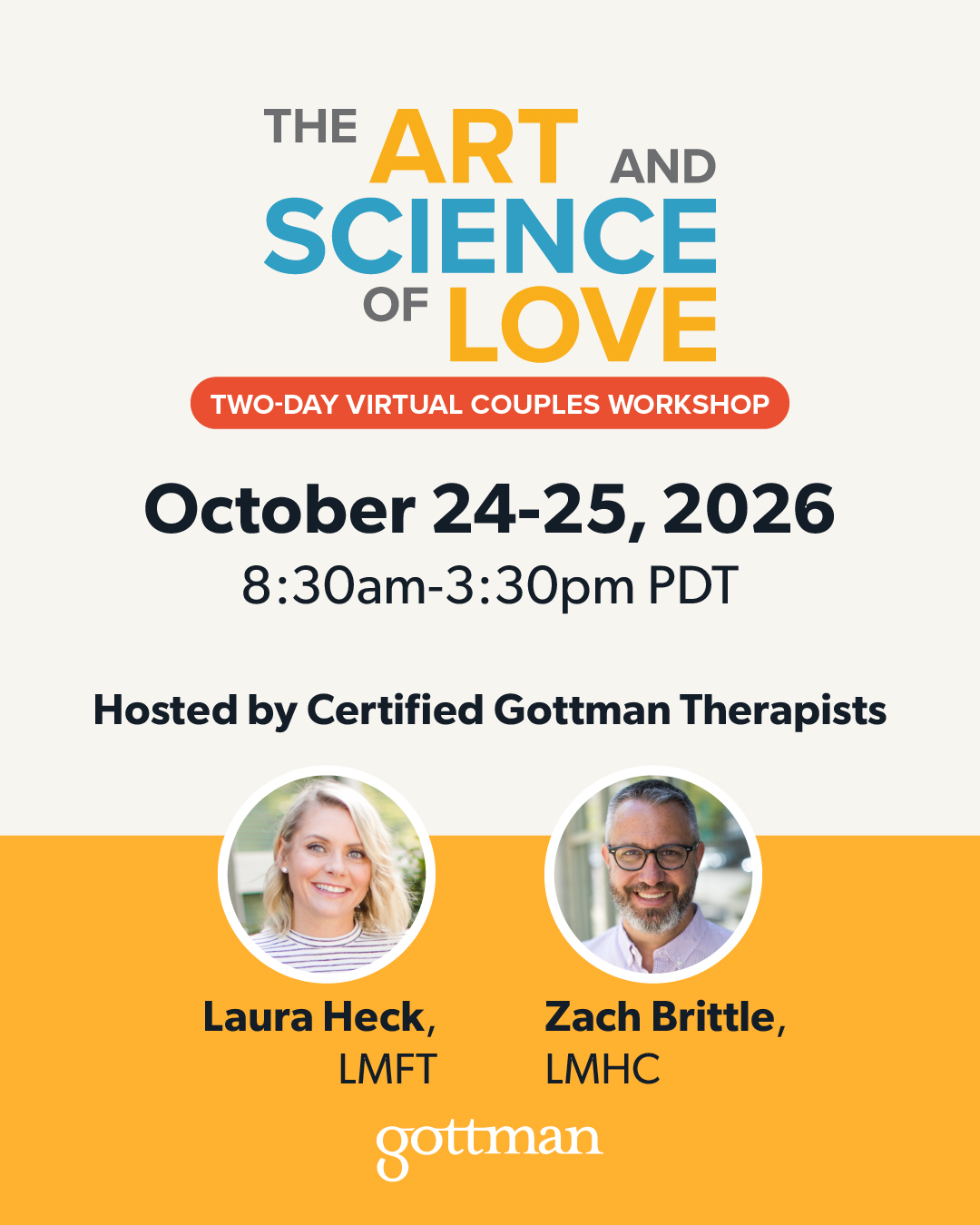
Created by “the Einstein of Love” (Psychology Today), this two-day workshop is grounded on what actually works in relationships that are happy and stable. See for yourself why millions of couples worldwide have benefited from the Gottman Method.

Quote from participant in most recent Live Virtual Workshop:

The Art and Science of Love workshop- where do I begin? It was an absolute stellar workshop. We were looking forward to this for weeks, and it exceeded our expectations! It was well-structured, and well-organized, and provided a wealth of information with real-time demonstrations of how to work through specific scenarios. The outstanding support that was provided throughout the exercises with therapists on standby- WOW! Priceless!

Includes the Art & Science of Love box set.  Please allow time for shipping.  Please Note: This is a live online event. To attend, you will need a reliable internet connection. Our staff will reach out to you with your personal registration and access information.

Related posts

Mother raising her hands while speaking to her teenage daughter on a sofa at home.

When the Angry Parent Is You

Alexander Elguren

How to stop yelling at your teenager: recognize parental flooding, take a break and return ready to listen.

Read More

Father making an emotional connection with his son.

John Gottman on Fatherhood

The Gottman Institute

Your role as a father is undeniably important. Use this day to take care of yourself and connect with loved ones.

Read More

a present father emotion coaching his young son, building a close father-son relationship

What I Learned About Being an Emotion-Coaching Dad to My Son for Over 15 Years

Alexander Elguren

A Father's Day reflection on raising emotionally connected boys in a world where men don't talk about feelings.

Read More

How to Improve Emotional Intelligence — the Skill Behind It Is Emotional Literacy

Alexander Elguren

Emotional intelligence can sound like a trait you either have or you don't. It is closer to a vocabulary — and a vocabulary can be built.

Read More

Signs of Low Emotional Intelligence in a Partner — and What It Means for Your Relationship

Alexander Elguren

It looks like indifference. Usually it's a skill no one was ever taught — which means it can be learned.

Read More

Parent helping child through a difficult situation.

Growth Mindset: Parenting for Possibility

The Gottman Institute

Learn how a growth mindset helps parents raise resilient kids through emotional coaching, effort, and everyday moments that build confidence.

Read More

Improve your Relationship Skills with our Free Newsletters
0