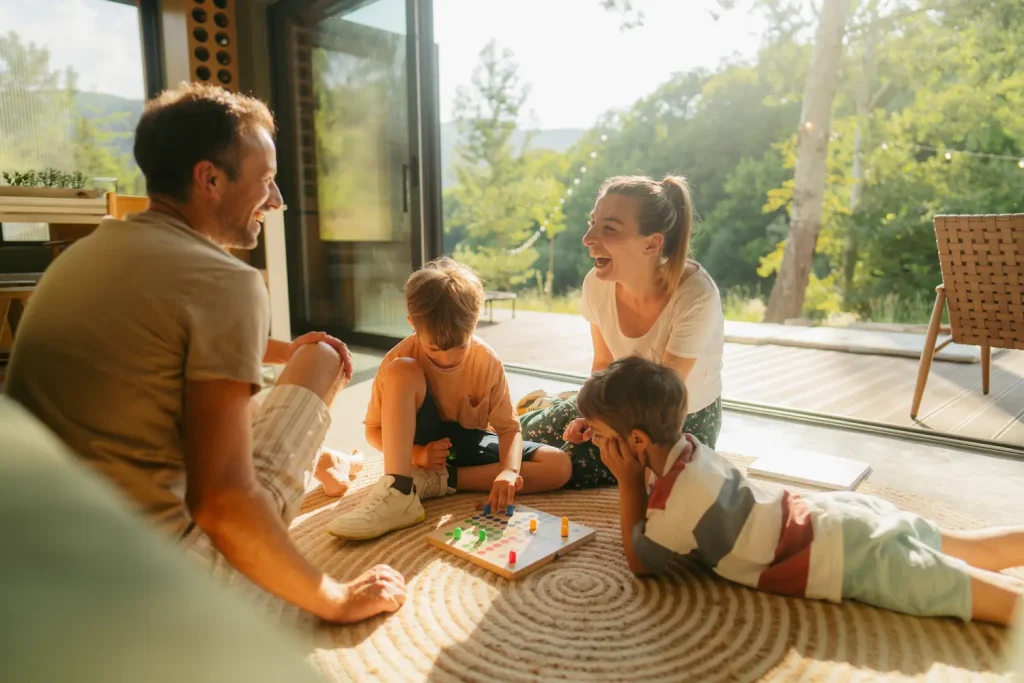
In many families, connection doesn’t happen during big, carefully planned moments. It happens in the small, repeated interactions that make up daily life—how we say goodbye in the morning, what happens at bedtime, or how we spend a Saturday morning.
Research shows that strong relationships are built through consistent emotional connection. For families, one of the most powerful ways to nurture that connection is through rituals of connection.
What Are Rituals of Connection?
Rituals of connection are predictable, meaningful interactions that help family members feel emotionally seen, safe, and valued. Unlike routines, which are often about getting things done (like chores or finishing homework), rituals are about relationships.
A ritual might be:
- A special bedtime check-in where each person shares one high and one low from the day
- Walking the dog to the park after dinner
- A weekly family meeting where everyone has a voice
- A weekend breakfast that you cook together
What makes these moments rituals is not their complexity, but their emotional meaning and regularity.
Why Rituals Matter
Dr. John Gottman’s research emphasized the importance of rituals of connection with partners in marriage in deepening emotional connection. But really this concept translates beyond a couple’s relationship to the relationships between and among all family members. These small moments can support the foundation of healthy relationships in several key ways.
Turning Toward Bids for Connection
Family members are constantly making “bids” for attention, affection, or support—often in subtle ways. Rituals create reliable opportunities to turn toward one another, strengthening trust over time. Toddlers who are securely attached will make about 16 bids per hour to their mom! But as adults and even older kids, we adapt to our environments. If our bids are not accepted, we will stop bidding as often. Kids, in particular, may feel embarrassed or ashamed if their bids are rejected. We see in couples’ relationships that the number of bids that are made will decrease when partners don’t respond.
Building the Emotional Bank Account
Every positive interaction is a deposit into the family’s emotional bank account. Rituals ensure that deposits are being made consistently, even during busy or stressful seasons. This means that when a stressful situation occurs, family members will be more equipped to deal effectively with it because of their healthy foundation of emotional connection.
Creating Shared Meaning
Rituals help families develop a sense of identity—this is who we are and how we connect. This shared meaning becomes especially important during transitions, conflict, or times of uncertainty. Research consistently shows that children who experience regular moments of connection feel more emotionally secure and are better able to regulate stress and emotions.
You May Already Have Rituals!
Many families already have rituals without realizing it. Before adding something new, it can be helpful to notice what’s already working.
Ask yourself:
- How do we spend weekends/evenings/mealtimes together?
- Are there certain activities that we already do together?
- Is there something specific (game, activity, show) that we all enjoy?
- What do we do consistently that brings us closer?
Recognizing existing rituals reinforces their importance and helps families build on strengths rather than starting from scratch.
How to Create Meaningful Family Rituals
Start Small and Sustainable
Rituals don’t need to be elaborate. In fact, the most effective ones are often simple and easy to maintain. Look for moments that already exist in your day—mealtimes, transitions, or bedtime—and infuse them with intention.
Rituals work best when they:
- Can easily become part of a routine or daily habit
- At least one person (at the beginning) is motivated to make it happen
- Include something fun or enjoyable
- Involve curiosity and listening
When possible, minimizing distractions—especially screens—helps reinforce emotional presence.
Follow Your Family’s Needs
Rituals should be developmentally appropriate and flexible. What works for a toddler will look different for a teenager. Allow rituals to evolve as your family grows and changes.
Examples of Rituals of Connection
- Daily rituals: Morning hugs, after-school check-ins, bedtime conversations
- Weekly rituals: Family meals, game nights, shared walks
- Transition rituals: Special hellos after separations, consistent goodbyes
- Repair rituals: Reconnecting after conflict with reassurance and care
Each of these moments provides an opportunity to turn toward one another and reinforce emotional safety.
When Rituals Feel Hard to Maintain
Families are busy, and no one gets it right all the time. Rituals will be missed. Schedules will change. Resistance especially from children or teens is normal. The goal is not perfection; when a ritual is missed, it becomes an opportunity to reconnect:
“I miss our time together. Let’s try again tonight.”
That message alone reinforces connection and trust.
Healthy rituals are not rigid; they are responsive. Families can:
- Invite input from all members
- Revisit rituals during life transitions
- Let go of what no longer fits and add new ones
What matters most is that rituals continue to serve their purpose which is to foster emotional connection and belonging.
Small Moments, Lasting Connection
Strong families aren’t built through grand gestures. They’re built through small moments of connection, repeated over time. If you’re looking to strengthen your family’s emotional bond, start with one ritual—simple, meaningful, and consistent. Over time, these moments become the emotional glue that helps families feel secure, connected, and resilient.