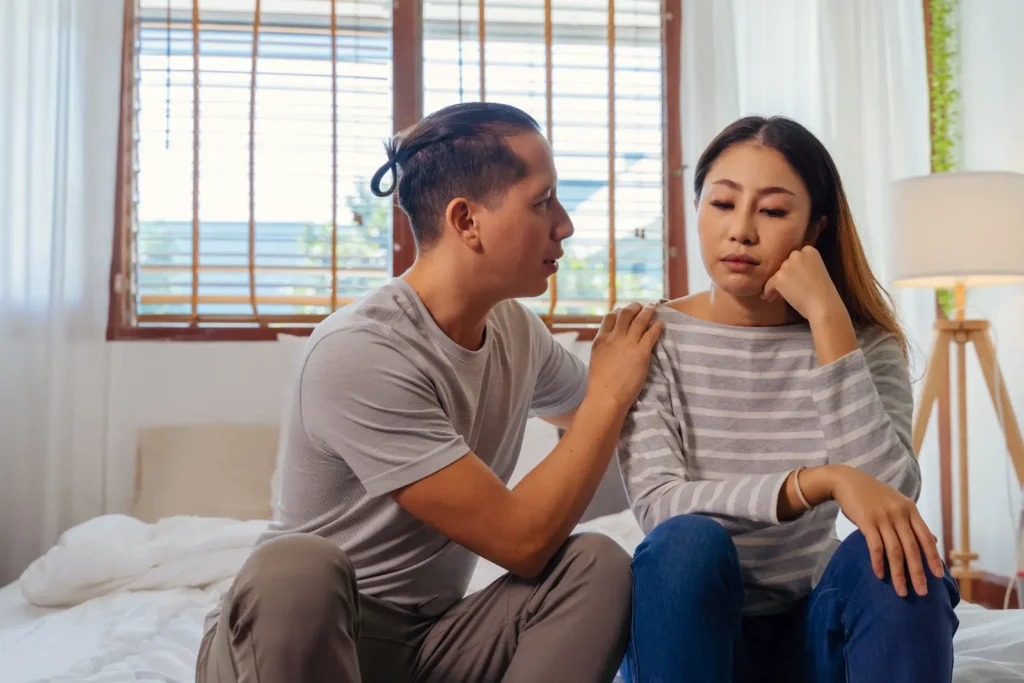
It is the third session, and the clinician notices she has been watching the same thing for twenty minutes: one partner leaning forward, the other leaning slightly back, a slow rocking motion the couple does not seem to know they are performing. She knows each of them well enough by now. What she is still learning to read is the space between them.
Gottman’s research-based framework is built for exactly that space. Instead of treating the couple as two individuals who happen to share a sofa, a clinician using it keeps the relationship between them in view, not just each partner alone. The premise is not that individual patient care stops mattering, but that it may look different when it also accounts for the relational context.
Individual Patient Assessment
Every partner carries something particular into the therapy room. Gottman’s model calls these enduring vulnerabilities: the accumulated sensitivities and patterns each person brings from before this relationship existed. A clinician attuned to these can recognize when one partner’s withdrawal is not resistance but a need to self-soothe, or when one partner lashes out over something that is really older than what brought them in.
Working through the levels of the Sound Relationship House, a clinician can see where each partner’s experience of the same marriage diverges from the other’s. Where two people see the same marriage differently, that divergence can be a useful place to begin.
Improving Patient Outcomes
The Gottman Method rests on decades of published research, and the evidence base continues to grow. Among the most recent additions: a 2024 study in the Journal of Marital and Family Therapy by Norwegian researchers Rune Zahl-Olsen, Frode Thuen, and Thomas Bjerregard Bertelsen, who examined the Gottman Seven Principles program with 490 participants using propensity score matching and the Revised Dyadic Adjustment Scale. Couples showed significant improvement in relationship quality, with those carrying the most relational strain showing the largest gains. Couples continued to do better at six-month follow-up, and in-person and online delivery produced comparable outcomes.
Set alongside clinical intuition, structured data can help. A written report of each partner’s strengths and concerns gives both of them a shared reference point across sessions, and something to hold onto when progress is hard to see.
The Relationship Checkup
The Gottman Relationship Checkup was designed to make this kind of structured assessment practical. Each partner completes 337 questions independently through a secure, HIPAA-compliant portal, covering friendship, intimacy, emotions, conflict, values, trust, finances, and individual areas of concern. The clinician receives two separate perspectives on the same relationship, with automated scoring and personalized recommendations. Where the perspectives diverge is often where the clinical conversation begins.
More than 30,000 therapists have used it with over 200,000 couples, grounded in over 50 years of research by Drs. John and Julie Gottman. The first assessment is free through Gottman Connect.
For the clinical framework behind the tool, the Gottman Method training track builds from foundational assessment through advanced intervention and certification.
Subscribe to the Gottman Professional Newsletter for research, tools, and training updates.
Join the Gottman Pro Newsletter
Receive regular updates and clinical resources for professionals from the Gottman Institute.
John Gottman’s concept of “flooding” triggers the “fight or flight” response, risking conflict escalation or emotional disengagement. Subscribe for free resources on managing it in clients.