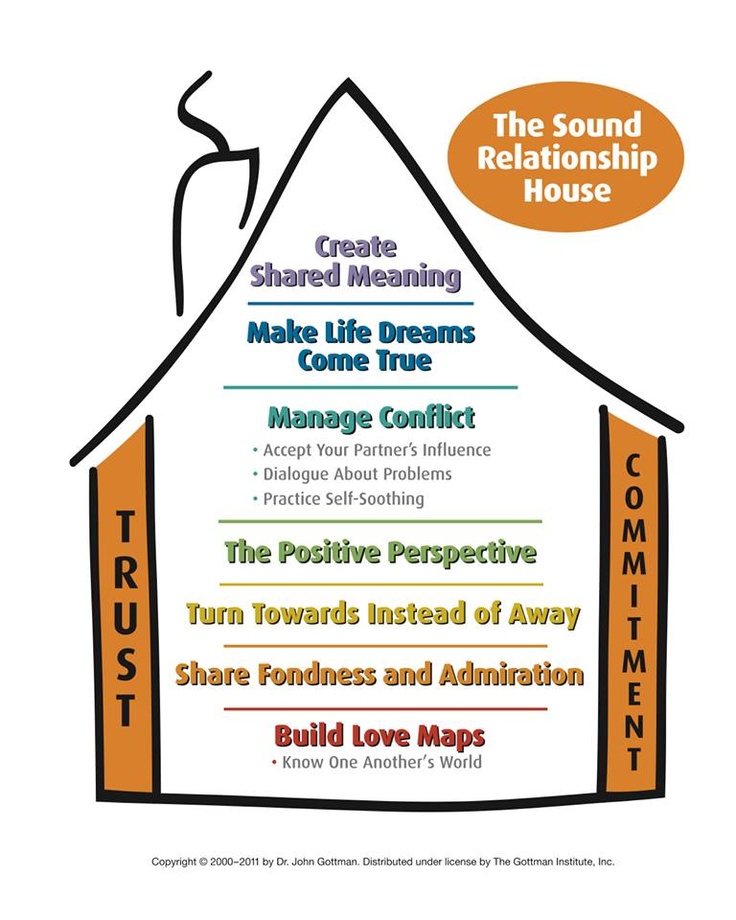
Like Love Maps in Dr. Gottman’s Sound Relationship House, Colleague Maps in the Sound Relationship Workplace refers to the amount of “cognitive room” a person allocates for understanding their co-workers. In essence, they are “maps” of their colleagues’ worlds that involve many aspects, including work, hobbies, and family. These maps help build trust and they change over time, so it is important to regularly update them.
When you build Colleague Maps with co-workers, you develop a deeper understanding of who they are. You learn their professional skills, strengths, job stresses, and accomplishments, as well as aspects of their personal lives such as a favorite hobby, the significant people in their lives (children, spouse, boyfriend/girlfriend), and where they live. In this exploration, we must remember the importance of appropriate boundaries. Even in the closest of relationships, people have different levels of comfort when it comes to disclosing personal information.
The key to sharing personal information in the workplace is to reveal aspects of your life that give people a picture of who you are without being too personal. I remember coaching a Senior Associate at a law firm, who I will call “Joe.” Joe was about to make Partner. However, the feedback that the Senior Partners had been given was that, although Joe consistently turned around very high quality work that was on time, no one knew anything about him. People joked behind his back that he was a “CIA agent.” His peers and subordinates did not trust him – not because he had done anything negative – but because he failed to share anything about who he was.
Joe had internalized the message that one’s personal life and work life should be kept completely separate. He worked very hard to not bring any aspect of his personal life into the office. Although well intentioned, he was inadvertently creating a persona of secrecy. This resulted in his colleagues not trusting him fully, and impacted the morale around him.
Joe and I worked together to craft messages that both felt professional and revealed aspects of his personal life, such as the activities he did with his children over the weekend, the types of restaurants he enjoyed frequenting, and even his artistic hobbies. He had to initially volunteer information about himself, since no one dared to ask. Only after he had established himself as more open did his co-workers begin to feel comfortable initiating such conversations with him. Joe also started to ask his colleagues about themselves – something he had not done before, even though he was curious about them. By developing Colleague Maps with others, Joe began to build trust with his peers, and he made Partner as a result.
So, in a busy work environment, when can you find time to develop your Colleague Maps? A great opportunity is at the beginning of meetings when people are waiting for the formal discussion to begin. During this time, colleagues share what they did over the weekend and talk about the latest sporting event, among other things. Without even realizing it, they are learning about one another’s outside interests, joys, anticipations, and family circumstances. Many individuals view this as “wasted time.” However, any savvy manager knows that this chatter is actually in the service of people getting to know one another to build trust.
Colleague Maps change as life circumstances change. Remembering what your colleague shared with you last month and following up with them about this information helps build trust further. If you have a hard time remembering personal details, you might consider keeping written track of what your colleagues share to jog your memory the next time you see them. Politicians use this trick all the time. Having lunch with a colleague is also a good time to build those maps! The value of personal, face-to-face interaction can’t be underestimated.
I recommend creating two kids of Colleague Maps: one for your colleague’s personal life and one for their professional life. Here are some examples of Colleague Map questions:
Personal life:
- How do you get to work?
- How was your weekend?
- I meant to ask you about …? (Follow up question to something that they shared with you last time you connected)
- What’s something new in your life that you’re excited about?
- What do you think about the …?
Professional life:
- How’s the project going?
- I noticed that you were not at the meeting last week. How are you?
- What do you most enjoy about our work? Least enjoy?
- How did you get into our line of work?
- What do you want to be doing professionally 3 years from now?
Notice that these questions are open-ended, meaning they cannot be answered with a “yes” or “no.” Open-ended questions begin with “how” or “what” and they require a lengthier response. The key to building Colleague Maps is not just asking the questions, but remembering the answers! This helps colleagues feel important to each other. For the record, building Colleague Maps by asking questions about politics and religion is risky and I don’t recommend it.
At a much higher level, developing relationships at work is essential to creating a strong professional network. And we all know that networks drive careers. Develop Colleague Maps not just within your department, but external to it as well!