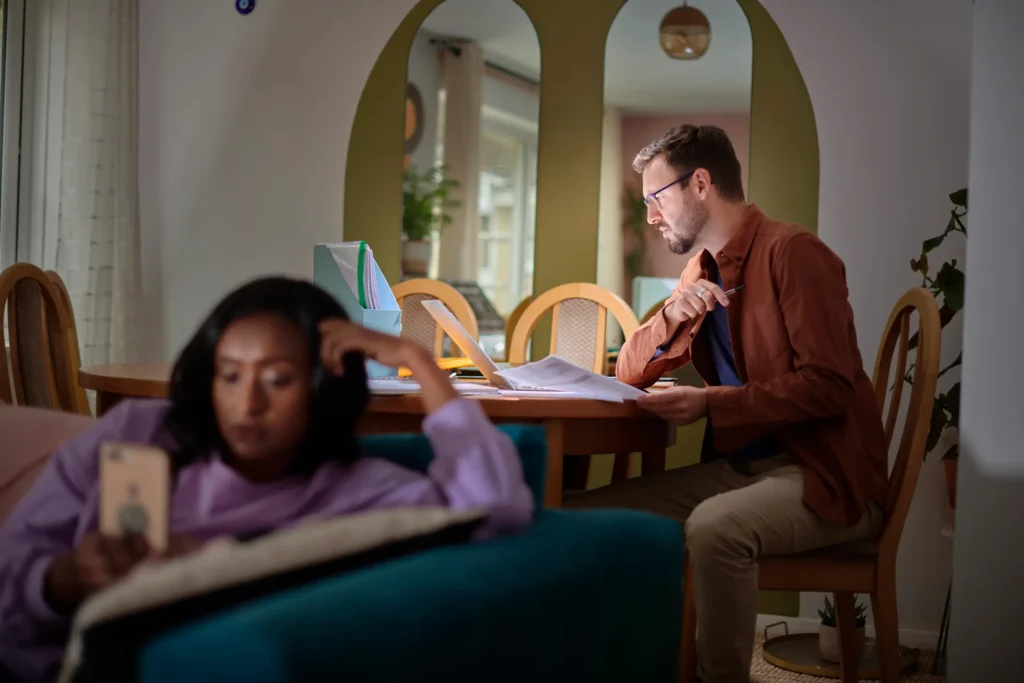
In a recent article When AI Makes Couples More Certain, But Not More Connected, I explored how artificial intelligence can make couples feel as though they have a better understanding of why their partners behave or react the way they do. But having that information doesn’t necessarily help them feel more connected.
As I continued thinking about this topic, it occurred to me that there’s another question worth exploring: If technology can explain relationship patterns, suggest communication strategies, and provide scripts for difficult conversations, what the heck do we still need a therapist for?
I appreciate technology. I use it myself, and I believe it can be a valuable resource for learning and reflection. I also think it can provide a relatively safe space to challenge some of our misconceptions and examine beliefs we might otherwise hold onto, particularly because we often approach AI as an ally that’s there to help us.
But there’s a difference between understanding emotions and experiencing them with another person.
Sometimes the Body Tells a Different Story
During COVID, I began working with a client whom I’d only met through video sessions.
Her facial expression rarely changed. She appeared remarkably calm, even when discussing painful experiences. I wondered whether she was naturally composed or whether earlier experiences had taught her that expressing emotion wasn’t safe.
I didn’t know.
Then we finally met in person.
My dog, Windsor, came over and settled into her lap. As we talked, I noticed something I’d never been able to see on camera.
Although her facial expression remained unchanged, she was vigorously petting Windsor. So vigorously, in fact, that she’d accumulated a little pile of loose fur beside her. Her foot was tapping continuously.
I smiled and said, “I notice you have quite a pile of fur there. Thanks for grooming Windsor. He appreciates it.”
Then I shared something else.
“I’ve been struck by how calm you’ve always appeared to me. But now I’m noticing these little places where your energy seems to be coming out through your body. I’m wondering if we could talk about that?”
Suddenly, we had another avenue for understanding her emotional experience.
I wasn’t diagnosing her based on foot tapping or assuming I knew what the behavior meant. I was noticing something, sharing my observation, and inviting her to help me understand it.
That is an important distinction.
Technology Changes What We Can See
Video therapy can be enormously valuable. It makes treatment accessible to people who might otherwise struggle to receive care, and meaningful therapeutic relationships can absolutely develop through a screen.
But a camera frames what we can see.
Sometimes I can observe someone’s face but not their hands, legs, posture, or movements. And when I’m working with couples, I may miss the subtle ways they’re responding—or not responding—to one another.
One partner might turn toward the other with open body language, looking for connection, while their partner avoids eye contact or doesn’t acknowledge the invitation. Someone might shift away just as their partner begins sharing something vulnerable. Even a slight change in tone can communicate something that the words themselves don’t reveal.
Emotion Looks Different on Different People
Emotions and flooding don’t look the same on everyone.
Some of my clients become almost completely still. They freeze, withdraw, and seem to be trying to blend into the environment. Others show their distress much more visibly. Their bodies become animated, their voices change, and they look as though steam might actually start coming out of their ears.
Both partners may be experiencing significant emotional distress, but it can look remarkably different.
When we’re together in person, I have access to additional information: changes in breathing, a hand gripping the chair, a foot tapping, someone turning toward their partner while the other turns away.
These observations aren’t answers. They’re invitations to become curious about what’s happening.
AI systems that rely on written descriptions don’t directly observe these interactions or hear the tone in which something was said. Even technologies capable of analyzing audio or video may struggle to understand what those signals mean within the context of a particular relationship.
As therapists, we’re not simply looking for signs of distress. We’re paying attention to how each person’s emotional experience influences the other, and whether the couple is able to recognize and respond to those moments together.
In Couples Therapy, We’re Watching the Relationship Happen
Imagine one partner expressing disappointment while the other becomes very quiet.
The first partner interprets the silence as indifference.
But I might notice that the quiet partner’s breathing has changed, their hands are clenched, and they’re struggling to maintain eye contact.
Rather than accepting either interpretation, I can slow things down.
“I noticed you became quiet when your partner said that. What’s happening for you right now?”
Then I might ask the other partner what they assumed the silence meant.
Now we’re exploring the interaction rather than arguing about who’s interpreting it correctly.
Perhaps the quiet partner is emotionally flooded. Perhaps they’re feeling ashamed. Perhaps they’re trying not to say something hurtful.
We don’t know until we ask.
The difference between receiving information and observing an interaction
When someone asks AI for relationship advice, the response is generally based on the information that person chooses to provide. Whether they realize it or not, they’re sharing the experience through their own emotional filters.
They may describe what their partner did without recognizing how their own behavior contributed to the interaction. They may interpret silence as rejection, defensiveness as a lack of accountability, or withdrawal as indifference.
Those interpretations may feel absolutely true to the person experiencing them.
But feeling certain about what something means doesn’t necessarily make that interpretation a fact.
In couples therapy, I have the opportunity to hear both partners’ experiences while also watching the interaction unfold between them.
I might notice that someone who describes their partner as emotionally unavailable interrupts every attempt their partner makes to express something vulnerable. Or I might observe that a partner accused of not caring is actually becoming emotionally flooded and struggling to remain engaged.
These observations don’t automatically tell me who’s right. They help me identify the questions we haven’t asked yet.
My job isn’t to confirm someone’s version of the relationship. It’s to help both partners become curious about the parts of the interaction they may not be seeing.
Knowing When to Intervene Is Part of the Therapy
One of the most important things I bring into the therapy room isn’t simply my ability to recognize what’s happening between two people. It’s my clinical judgment about what to do with that information, and when.
Sometimes I’ll notice a familiar pattern beginning to unfold between partners. One person becomes defensive. The other becomes increasingly frustrated. Their voices change, their bodies become more tense, and I can see the emotional temperature in the room beginning to rise.
But I don’t necessarily interrupt immediately.
There are times when I want to observe how the couple navigates the interaction. Will someone recognize that their partner is becoming overwhelmed? Will they make a repair attempt? Will they continue escalating, or find a way to reconnect?
Other times, I recognize that the conversation is becoming unproductive or that someone is approaching emotional flooding. That’s when I might intervene, slow things down, or suggest a break.
The decision requires more than recognizing a communication pattern. It requires understanding the couple’s history, their emotional capacity, the level of safety in the room, and what we’re trying to accomplish therapeutically.
On the Other Hand…
When someone types a question into an AI chatbot and hits Enter, the system is generally designed to respond to that prompt. It doesn’t ordinarily have the opportunity to sit with a couple, observe several minutes of interaction, and decide that the most useful intervention is to wait—or that the most important thing to do is interrupt.
My clients come into therapy expecting me to help them recognize and change patterns they may not be able to interrupt on their own.
Sometimes that means offering an observation. Sometimes it means challenging an assumption. And sometimes it means recognizing that the most therapeutic thing I can do is allow a little more space before saying anything at all.
Knowing what to say matters. Knowing when to say it can matter just as much.
Knowing the Skills Isn’t the Same as Being Able to Use Them
The Gottman Method gives couples valuable tools for managing conflict, recognizing bids for connection, and making repair attempts.
But I’ve worked with plenty of couples who understand these concepts intellectually and still struggle to use them when they’re upset.
Someone can know how to deliver a softened startup and still begin with criticism.
Someone can memorize an apology and deliver it with so much irritation that their partner feels even more disconnected.
In therapy, we can pause those moments and practice responding differently.
We can help partners recognize when they’re becoming flooded, identify a missed bid for connection, or understand why an attempted repair didn’t land.
And sometimes the most important intervention is recognizing that the couple needs to stop, regulate, and return to the conversation when they’re more emotionally available.
That requires clinical judgment, emotional attunement, and attention to safety.
The Relationship Is Part of the Intervention
There’s another element that’s difficult to capture through technology: the experience of being emotionally present with another person who is genuinely trying to understand you.
As therapists, we don’t always get it right.
We misunderstand things. We miss cues. Sometimes we need to acknowledge that an intervention didn’t land the way we intended.
But even those moments offer opportunities to demonstrate something essential about relationships.
Connection doesn’t require perfection. It requires curiosity, accountability, and a willingness to repair.
I don’t believe technology and therapy need to compete.
Technology can help people prepare for conversations, learn relationship skills, and reflect on their experiences.
But knowing what emotional connection looks like isn’t the same as experiencing it.
Technology can help us learn the language of connection. Human relationships give us the opportunity to practice living it.